


After two years of virtual meetings, we are happy to inform you that the EUNWA annual event is finally back “in person” and we would like to warmly invite you to join it!
This year the event will take place in Venice, Italy, on October 7th, and we hope it will gather, as the previous years, a wide range of participants: representatives of Neighbourhood Watch associations, scientists, practitioners, subject matter experts, representatives of law enforcement agencies, civil society representatives, academics.
EUNWA has the ambition to become a centre for the study and documentation of participatory security in Europe, and this requires in-depth knowledge of each national reality. Therefore, its Board has decided, as of this year, to change the format of its annual meetings. Based on the experience of our past meetings, we have found it more profitable to focus on one country at a time, in order to better understand it. This year the French Neighbourhood Watch (Voisins Vigilants et Solidaires - VVS) will be the main focus.
Two French citizens who are members of the Voisins Vigilants et Solidaires network and its President, Thierry Chicha, will be honoured with the “Mythos Award”, a prize created in collaboration with the Metropolitan City of Venice and the Mythos hotel chain, which aims to reward citizens who have particularly distinguished themselves for their commitment to promoting “participatory security” in their communities.
The award ceremony will be held in the prestigious venue of the Metropolitan City of Venice, PALAZZO CA' CORNER, Nassivera Hall, San Marco 2662, 30124 Venezia – Italy.
The event will be attended by local civil authorities and representatives of Italian and European Neighbourhood Watch associations.
During the event, our French friends will illustrate the development strategy of their network that has led them to reach one million members in just a few years. They will also present the VVS web platform, whose development and dissemination have been crucial to their growth.
We count on your active participation in order to make this event successful!
Registration to the event is required. Registration link here: https://forms.gle/riEkQegJaTj8aJrE7
Looking forward to seeing you in Venice!
the EUNWA Board
® All rights reserved

The Neighbourhood Watch programme has its roots in the criminological 'Situational Prevention' and 'Theory of Routine Activity’. The scope of intervention of Neighbourhood Watch is very specific, and never overlaps with the functions performed by the police: the repression of offenders remains an exclusive domain of the law enforcement agencies.
However, participating in community security requires not only a significant cultural change on the part of the institutions and the police, but also a cultural change in civil society.
It is not enough for citizens to trust the police and for the police to trust citizens, but it is also necessary for citizens to trust each other. It is fundamental to realise that security is an issue for the whole community, and that there is a strong interdependence between your own security (real and perceived) and your neighbour’s.
How the Neighbourhood Watch works
Residents can interpret and understand the private space and context in which they live (be it people or situations) better than the police, which makes them capable of identifying risks and criticalities in private contexts that the police do not routinely monitor and in which most predatory crimes occur. With Neighbourhood Watch, this interpretative ability is made available to the police for a better chance to intervene in the prevention and repression of petty crime. The knowledge and ability to interpret the context characterised by micro-community places represent an added value for citizens in participatory processes, both related to security and to many other aspects of community life.
Another important aspect is that residents are the only ones who can implement specific passive prevention actions in their private spaces for specific vulnerabilities (e.g., install high quality locks, install alarm systems, change of habits and behaviour, etc.).
Different approaches
The emergence and development of the Neighbourhood Watch in Europe has followed different paths depending on the history, political situation, and regulatory framework of each country. However, they all have in common two possible approaches to launch the programme: top-down or bottom-up approach.
Top-down approach means promoting the Programme through the institutions. This approach assumes an initial relationship of trust between citizens and police and can last as long as this trust relationship remains high. If the trust relationship breaks down, there is a high probability that citizens will stop cooperating with the police. This approach is difficult to apply where there is a historical distrust between citizens, institutions, and the police.
In Bottom-up approach citizens self-organise into Neighbourhood Watch groups. In many European countries, Neighbourhood Watch was established directly by citizens, and only later supported by the institutions and police (e.g., in France or Italy). In areas where Neighbourhood Watch started from the bottom-up, there was a good level of social cohesion and sense of community, and a good response from the mayors and local police. On the other hand, Neighbourhood Watch hardly started in areas where individualism is highly developed and social solidarity is lacking.
However, there are still some countries in Europe where the Neighbourhood Watch is barely tolerated by the authorities due to historical and cultural factors. These factors can be summarised in an atavistic distrust of citizens towards institutions, or a suspicion towards citizens' participation in the security of their communities, seen as interference in the institutional activities of law enforcement agencies.
Positive side effects
Based on Neighbourhood Watch experiences in both Western and Eastern Europe, some recurring positive side effects have been observed:
- reduction of perceived insecurity in the communities (this is extremely important because very often people think, and vote, based on this perception and rarely on objective crime statistics.);
- reduction of petty crime rate (the Ministries of the Interior of several European countries claim a reduction in crime from 20 to 40 per cent in areas where this programme is well developed.);
- improved citizen dialogue with police and institutions (dialogue is better structured where community policing policies have been implemented.)
Where Neighbourhood Watch is implemented and there is a good level of cooperation among neighbours and between neighbours and the police, we generally witness:
- an increase in social cohesion and citizens' sense of belonging to their community;
- an intensification of dialogue between citizens and institutions (especially at local level);
- a readiness of the institutions to develop processes of participatory democracy and the willingness of citizens to participate in them.
Ready for Neighbourhood Watch?
If the society is not ready for the promotion of Neighbourhood Watch programmes, by introducing into the public debate the principle that security is a matter not only for institutions but also for each individual citizen, the consequences could be counterproductive. Its 'forced' introduction could generate a perception of a loss of authority and status on the part of the police, and a fear of being 'evaluated' by citizens or, on the part of citizens, of becoming 'confidants' of the police. Instead, we are deeply convinced (and experiences in the field have proven it) that listening to citizens about their security needs and involving them, within a clear and defined legal framework, does not mean a loss of authority, status, or professionalism on the part of the police, but an increase in the latter's ability to prevent and repress crime.
Leonardo Campanale - EUNWA President
® All rights reserved

100 days of war between Russia and Ukraine, 4100 civilians dead including 260 children. 5000 injured. 6.8 million Ukrainian refugees.
810 days of Covid19 and its variants, 528,275,339 confirmed cases worldwide of which 6,293,4214 died.
We have been taught that the time of a crisis does not exist in terms of uniformity and timeline, because in a crisis, time becomes the beating of useful actions to contain the damage and make people and territories safe again. Actions are taken with immediacy, between the occurrence of the early signals and the manifestation of the critical episode. Actions then follow one another, in order of priority, in an authentic flow of acts and communications that can no longer and must not be stopped, just like those mountain fountains in which water gushes out spontaneously without being artificially extracted.
The time of the crisis is not scheduled on the timeline because, if it was possible, actions would be performed in concert, all in unison: I manage the consequences, I support the people and areas affected, I search for the causes and contain any reputational damage. All together. Since simultaneity cannot be managed, actions are performed according to strict priority logic. The episode that generates the crisis or catastrophe, even when it causes long-term damage, is normally short and intense: an accident, a flood, an earthquake, a fire, a bankruptcy, a bereavement...
But these 100 days of war, added to the 700 of the pandemic, clearly suggest that one of the 'new elements' to be understood and managed is time. That time that has changed us and will never make us the same again.
The ancient Greeks already taught us that the perception of time changes and that objective and subjective time do not coincide. In extremely dangerous situations, time slows down and moments become eternal. This distortion is created by our memory because more critical events generate more memories and therefore the mind perceives a longer time. To the effects on memory and emotions, fatigue must be added. A fatigue which comes suddenly and that brings with it a progressive and understandable indifference. The number of articles and reports devoted to the war has decreased eightfold since the beginning of the conflict, and interactions on social media have dropped from 109 million to 4.8 million. Levels of attention and concentration on risks and consequences have declined, and clocks continue to record the simple passage of time trying to shift and neutralise, on the symbolic horizontal line, the sinusoidal curve with its alternating sharp peaks.
Time has become part of the crisis too: an off-stage voice, but an undisputed protagonist that, once again, forces us to face fatigue, since the risk of remaining defenceless and weakened in the desperate attempt to imagine a crisis coming to an end is too close and too dangerous. That is why, in the books we are going to write about the lessons we have learned, under the heading 'prompt and immediate reaction' we will also add 'danger of adapting to the level of risk', a new parameter that will have to be taken into great consideration, because indifference and fatigue are threats that leave open the risk that someone could always take advantage of the time factor.
Paola Guerra - Founder and Director of the International School of Ethics & Security Milan - L'Aquila

21 February 2020 - If we had been asked at the end of 2019 to assess the likelihood of a global pandemic, we would have said it was completely impossible.
24 February 2022 - We would have thought the same if we had been asked at the end of 2021 to evaluate the probability of a war breaking out in the middle of Europe.
Remote hypotheses, which we cannot imagine, cannot consider as possible...
It is true that imagining or thinking about emergencies and world crises instils anxiety, fear, and terror. It activates our operational centre in the amygdala, which 99% of the time causes automatic reactions of the autonomic nervous system, causing a great deal of fatigue, so it is better to rationalise, deny, and close our eyes to danger signals.
In this historical moment, it is our duty and responsibility to promote a culture of preparedness. Risks are certainly uncertain events, but emergencies and crises do occur. And this requires careful preparation before, during and after the crisis.
It is necessary to look at the unexpected and at those unpredictable events that can occur and break any equilibrium with focus, competence and skill.
So, what to do?
- Constantly monitor risks and possible emergencies or crises from authoritative and reliable sources
- Build possible scenarios (best case and worst case)
- Prepare the organisation and the “chain of command and control”
- Plan operational processes and actions
- Constantly monitor KPIs and “early signals”
- Activate decision-making processes
- Analyse effects and review actions
- Sit down together to evaluate the "lessons learned"
These are the foundations for creating high-reliability organisations, capable of creating a state of mindfulness, that is, full collective awareness that produces the widespread ability to analyse risks, identify hazards and react promptly when they occur.
A special emphasis, arising from the head and the heart, must be placed on People who experience stressor events in their everyday lives and who, for the last two years, have been living in a global pandemic and now have also to face war scenarios. There are many people who feel destabilised, confused, frightened. We have come face to face with war already being in a situation of psychological exhaustion, and this makes it difficult to cope with this other emergency. People must therefore be listened to and supported in dealing with destabilising thoughts, feelings, and emotions. They must be helped to cultivate well-being, which is the ability to balance the negative and positive aspects of life.
The challenge is therefore to make it a priority for every family, organisation, and company to be aware of the importance of being ready and reliable organisations, that is, aware and prepared to face life in its moments of stability and instability. Only in this way there may be evolution and growth!
Paola Guerra - Founder and Director of the International School of Ethics & Security Milan - L'Aquila
Visit the web site of International School of Ethics & Security Milan - L'Aquila

Interview with Thierry Chicha, President of "Voisins Vigilants et Solidaires”
In France over the last decade, the Voisins Vigilants et Solidaire (VVS) programme has developed strongly and gained a lot of public visibility. We interviewed its President, Mr Thierry Chicha, to understand the reasons for this rapid expansion, what difficulties they have faced and what their future plans are.
Good morning, Mr Chicha, and thank you for this interview. We have read on your website that the VVS system has now been adopted by more than six hundred French municipalities and some Belgian municipalities, and that more than one million citizens have signed up to it. This growth is unparalleled in any other European country in the last ten years. What is the reason for this increased interest?
Hello EUNWA team and thank you for your interest in the initiative we are developing in France. Things are evolving fast... we are more than 700 cities at the moment. In my opinion, the key to the success of Voisins Vigilants et Solidaires in France is the communication tool. We have invested between 2 and 3 million euros and almost 20 years of work to develop a reliable web platform, mobile application, SMS, and telephone messages exclusively dedicated to the Neighbourhood Watch with all the necessary safeguards.
What is the average size of the municipalities participating in the scheme and in which areas has it developed most?
There is no real rule ... it goes from 50 inhabitants to 500 000 inhabitants.
Have you had the opportunity to reflect on why the VVS scheme has developed more in rural and peri-urban areas than in urban areas? Is it possible that the programme has taken root mainly in areas where there are more solid networks of social and neighbourly relations, which is often absent in cities where anonymity prevails? Do you think that the current organisational and participation model of VVS can also take root in big cities or do you foresee a change of strategy to achieve the "villages in the city" effect?
I quite agree with this first analysis, I would also add the type of housing. Voisins Vigilants et Solidaires is a system that mainly focuses on the problems of theft and burglary, and these problems are over-represented in houses compared to flats. That said, this is not as true today as it was 10 years ago. A city like Marseille, for example, is gradually deploying the system.
What, if any, is the typical profile of the citizen joining the VVS scheme?
As you know, with 1 million participants, the VVS is increasingly a reflection of the French population. Homeowners are obviously over-represented, and the average age is therefore a little higher than that of the rest of the population.
VVS has developed a web platform enabling virtual dialogue between citizens, local authorities, and the police on security issues. Of the one million citizens registered, how many actually use the platform?
Roughly 50% of subscribers receive regular alerts and consult them immediately.
When registering on the VVS platform, do citizens have to subscribe to rules of behaviour? For example, how do you manage the social anxiety that may result from reporting false positives or alarmist messages, and how do you manage any messages of hatred, discrimination, or political controversy?
Of course! All VVSs commit to respecting a charter of good conduct. All alerts are broadcast within a restricted perimeter (delimitation of sectors carried out by the town hall). The VVS are trained in partnership with the Police. All contact details of registered users are checked by our teams. All alerts are checked by our moderators and the authors can be sanctioned.
Without questioning to the personal responsibility of those who carry out actions contrary to the law, do you have a mechanism to exclude from the VVS system those who intervene personally against thieves, as happened in the municipality of Hénin-Beaumont, going beyond the mission of VVS and acquiring prerogatives that are the exclusive responsibility of the police?
Let us specify that there has never been the slightest drift noted in the framework of the VVS system for 20 years and on 1 million members. The event to which you refer has nothing to do with VVS. I am even convinced that it is the absence of VVS that leads to this kind of drift. The inhabitants organise themselves; they are not trained; no framework is set up and that is where it can go wrong. It is important that the public authorities become aware of the problem and rely on a solution validated by the national police in order to structure these angry inhabitants.
Has vigilantism ever developed within VVS communities? We know that these activities are strictly forbidden by the laws of the French state.
No, never!
In addition to the revenue from the costs of municipalities joining the VVS scheme, do you receive other subsidies from the French state? For example, through the FIPD (Fonds interministériel pour la prévention de la délinquance)?
Membership of the VVS scheme for individuals is completely free of charge, regardless of whether the town council is a member of the scheme or not. Municipalities’ membership represents 95% of our income. Some municipalities can get funding from other local, regional or national institutions, but this does not really concern us directly anymore.
Notwithstanding the controversy between the left and the right in France about the effectiveness of VVS, a million adherents of your device may appeal to politicians as a potential voting pool. Have you ever been courted by any party? And in general, what is your relationship with political parties?
It goes without saying that we are apolitical.
Citizens registered on your web platform can report problems related to safety and urban decay to their municipality (if it is also a member of the scheme) using case codes. Is there a channelling process behind these reports? Who handles the reports? Do citizens who submit reports receive feedback from municipalities?
There are as many operating methods as there are town halls. Our tools (once again, this is the key) allow us to adapt the operation of the system to the size and problems of the municipality.
In France, the political-administrative model is strongly characterised by state centralism and does not include the possibility of citizen participation in policing. Some things have changed since the serious terrorist attacks of 2015-2016. In fact, already in 2011, after the birth of VVS, the French state launched, with the circular of the then Minister Claude Guéant, the "Participation Citoyenne" initiative, a pact of collaboration between prefects, police forces and municipalities under the supervision of the Ministry of the Interior. How did you interpret this decision? Was it an opening of the French State to the participation of citizens in the security of their communities, or was it an attempt to "saturate the spaces" and prevent your "bottom-up initiative" from gaining a foothold outside the institutional sphere? The coexistence of the two systems created some problems for mayors who often did not understand the difference and controversy in the press due to the fact that VVS was paid for (by municipalities). How did you manage this problem?
What was the original intention ... I honestly don't know. One thing is for sure: today the institutions are moving closer to VVS. The simplistic opposition of free VS paying has had its day and many municipalities, police stations, gendarmerie brigades realise that if they want to set up a system that works without being obliged to dedicate a civil servant to it all year round ... VVS is the right solution! Our recommendation is to systematically implement VVS + Citizen Participation.
With the circular of 30 April 2019 the Ministry of the Interior Christophe Castaner states that "private systems can be complementary to the state apparatus", with an implicit reference to VVS. This seemed to us to be a further step forward by the French state towards bottom-up citizen initiatives on security. The subsequent signing, in February 2021, of an agreement between VVS and the “Direction Centrale de la Sécurité Publique” seems to us to have been a radical change of perspective. Do you foresee an operational convergence between the two systems in the future?
This is indeed a big step! And I can't tell you at this time what will happen in the coming months ... we are moving forward on different topics.
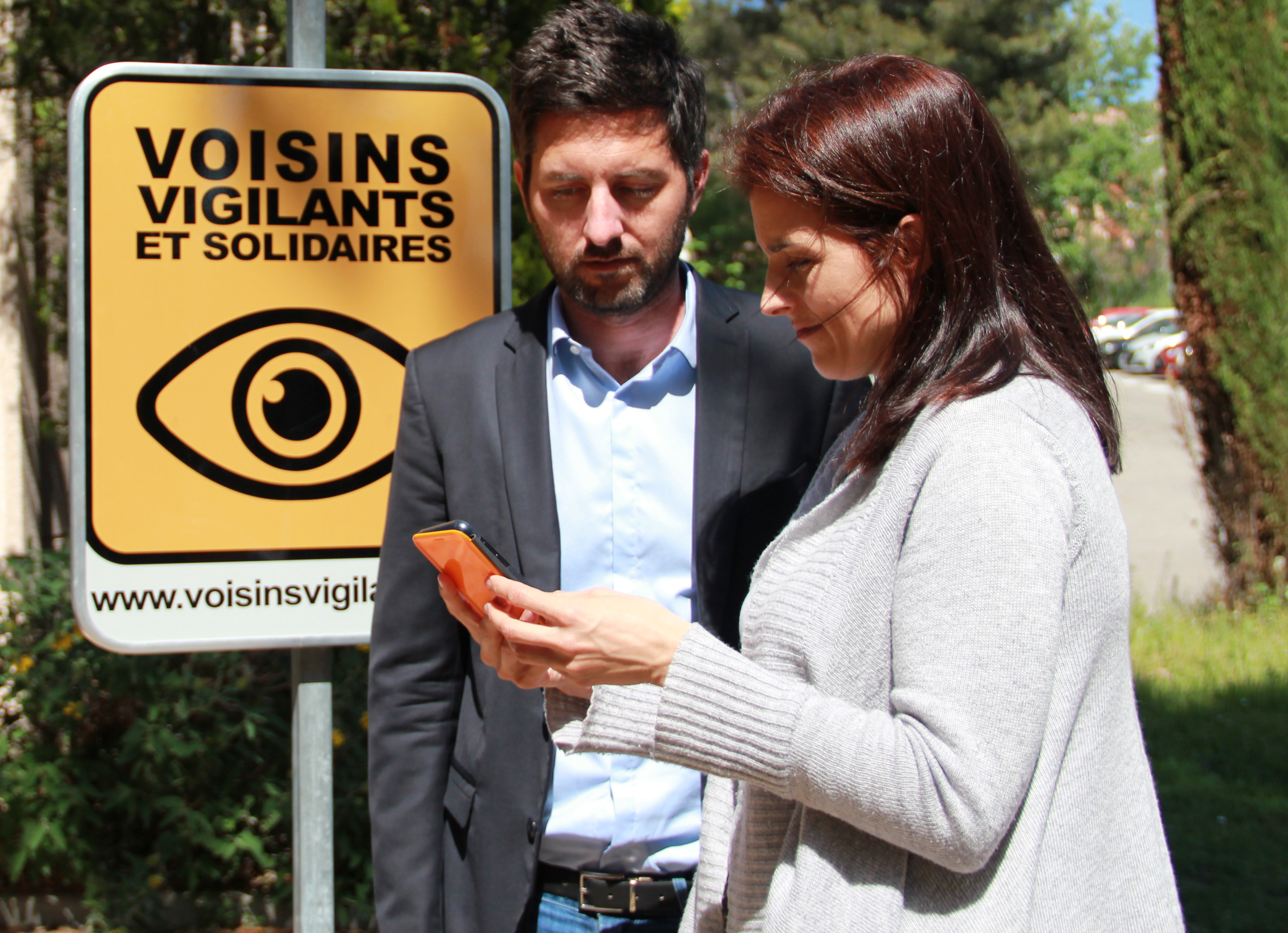 VVS groups are present in suburban and rural areas, representing mainly homeowners, often elderly, who fear property crime. In your opinion, does this not pose problems of representativeness, effectively endorsing social fragmentation and the exclusion of undesirable groups? For example, what is the percentage of residents of foreign origin who adhere to the scheme?
This is of course not a question that is asked in the registration form. I have no data to answer this question.
Is there any content on the VVS platform other than community safety issues?
Yes, of course, the VVS have a neighbourhood newspaper and a message board. It is not uncommon in these spaces, which are quite distinct from the alert, to see exchange of messages for lost pets or neighbourhood meetings.
Do you have evidence of the participation of the VVS in other activities and social networks (as is often the case in other European Neighbourhood Watch experiences), committed to the safety and decorum of neighbourhoods, such as the "exploratory walks" that took place in some French cities to reappropriate public spaces invaded by prostitution or drug dealing?
I have no data on this subject.
Given the increased involvement of institutions in the VVS scheme, is there a real possibility that in the future representatives of the VVS will be formally involved in the activities of the CLSPD (Conseil Local de Sécurité et de Prévention de la Délinquance) as was the case in Rennes? This would also allow the voice of citizens to be heard in more targeted prevention and law enforcement actions.
This is already the case in the majority of municipalities that have a CLSPD and VVS.
In your opinion, is there a risk that VVS, which has been promoted as a participatory model on the issue of security, could, in time, serve as a way for local and national authorities to channel citizens' complaints, preventing them from overflowing onto social networks or, even worse, resulting in protest movements, without receiving an effective response from the institutions?
No. I do not feel that the authorities are willing to do this at all levels. Moreover, VVS remains an independent organisation.
On an individual level, citizens involved in the VVS network can be gratified by involvement and active participation, developing feelings of usefulness, and belonging to the community. These activities produce positive concrete effects such as the reduction of thefts and a greater sense of security in the neighbourhood. In general, do you think that VVS can also contribute to lobbying for better local and national security policy?
Our DNA is not to lobby but to do. We are currently working on various projects: video protection, securing shops, connected alarms, partnerships with housing stakeholders, etc. In this way, we hope to contribute in a very modest way to the reduction of insecurity. We obviously give our full support to the police, gendarmes, and municipal police officers, it is thanks to them that we sleep peacefully.
It is certainly complex to establish a statistical correlation between the presence of Neighbourhood Watch activities and a decrease in predatory crimes. There are many variables to consider, from the Covid pandemic to the arrest or displacement of thieves operating in a particular area, to the general reduction in these crimes. The French press reports different percentages of effectiveness, and the Ministry of the Interior speaks of a 40% reduction in crime. The difficulty of measuring the real impact represented by citizens' participation in the security chain is common to all European Neighbourhood Watch realities. What is your opinion about this?
The reduction in crime is undeniable ... but by how much? We do not have the time or the means to conduct a large-scale study on this subject.
We will follow the development of VVS with great interest. We look forward to interviewing you again to follow your new developments.
I would like to add one last point: In partnership with the EUNWA, we have always wanted to deploy an effective Neighbourhood Watch in Europe. The approach that we have implemented in France is working. If some of you wish to rely on us to develop your NW in your country, we would be delighted to help you, in particular by providing you with all our tools.
Thank you very much Mr. Chicha!
Visit the website of Voisins Vigilants et Solidaires www.voisinsvigilants.org
EUNWA® all rights reserved

As reported by Prof. Battistelli in 20131 , "from the 80s of the twentieth century a significant change in the concept of safety has taken place. The traditional concept of public safety has turned into the more specific notion of urban security. However, the question arises as to whether the new definition can be considered a replacement for the previous one: it certainly constitutes a radical extension. In itself, in fact, urban security includes the 'necessary' characteristics of public safety but, at the same time, it includes more specific characteristics".
The paradigm of urban security promises to pursue the development of the opportunities and the rights of most of the people that are part of it (in some cases even non-native). Urban security includes not only the protection of a society from threats, but also the satisfaction of its most advanced needs, extending the realisation of this objective to both private and public agencies (Battistelli 2013). Private agencies, consequently, seek to settle themselves into a new area of society with the aim of privately performing protection and security functions while maintaining a very strong link with public authorities (e.g., law enforcement, ministries).
In this regard, Italy has always maintained a prudential attitude towards the sharing of any data on crime, making it the exclusive prerogative of the Public Security Authorities. Centro Elaborazione Dati Interforze (CED)2 is part of this framework. Instituted by Article 8 of Law /1/4/1981, no. 121 for the purpose of coordinating the collection, classification, analysis, and evaluation of information on the protection of law and order, public security and the prevention and repression of crime (Art. 1, para 1, Legislative Decree 18/5/2018, no. 51), it was subsequently incorporated in 2001 within the new Sistema Di Indagine (SDI)3 platform. The latter is, to all intents and purposes, the largest public database (on crime, offences, and urban decay) in Italy to date.
The SDI platform is constantly enriched with a great deal of data relating to unlawful episodes, potential offenders, subjects, persons, property and much more. In other words, 'quantitative' information is integrated (e.g. geographical distribution of criminal events, episodes of urban decay and offences) with 'qualitative' information4.
Within this enormous database (SDI) also the geo-localized5 data on episodes of crime, generated by the tabularization of the complaints received by the competent authorities, are naturally conveyed. This geo-referenced collection has a specific objective: to put the Police Forces in the condition of being able to carry out urban risk analyses finalized to the understanding of the principal critical areas on which to activate mitigating/contrasting/preventive actions. Such geo-localized data, if rendered devoid of any sensitive information, could have an undoubted value also for Associations, Third Sector Organisations, Foundations, private citizens, and companies, as part of the social fabric.
This is in line with the United Nations (2018)6 report on the urbanization processes that the world, especially the western world, will face by 2050. In fact, it is expected that 68% of the world's population will live in urban-metropolitan contexts, increasing the vertical and horizontal growth of our cities. Such densification will be accompanied by an unequally rapid increase in the number of the Police Forces involved in the control of the above-mentioned urban spaces. This gap will inevitably imply an increasing assumption of responsibility by all the stakeholders (public and private) of our society, who will become an integral part of the process in the field of 'participatory urban security'. In other words, each of us will be called upon to contribute so that cities can maintain adequate levels of safety, inclusion, and balance.
It is within this framework that one of the greatest challenges of the future will be played out, and in order not to lose it, it will be essential to focus on a radical change in the area of 'open data' on crime and urban decay. In fact, if this change doesn’t happen, how could public/private stakeholders identify streets or urban micro-areas where there may be 'pockets' of crime on which it is essential to intervene with operations of contrast, mitigation, and risk prevention? It would not be possible, or at least it would be extremely complex.
The idea of a synergy between the police, citizens, businesses, and any other stakeholder (part of the social structure) can concretely lead to tangible and measurable benefits. In these countries, in fact, the concept of 'open data' in the field of security (and not only) was legitimised years ago, making our country, unfortunately, still rather behind the standards across the border. For example, although updated in 2017, the Open Data Barometer7 relegated Italy to a less than optimal position in terms of open data in Europe (see Figure 1).
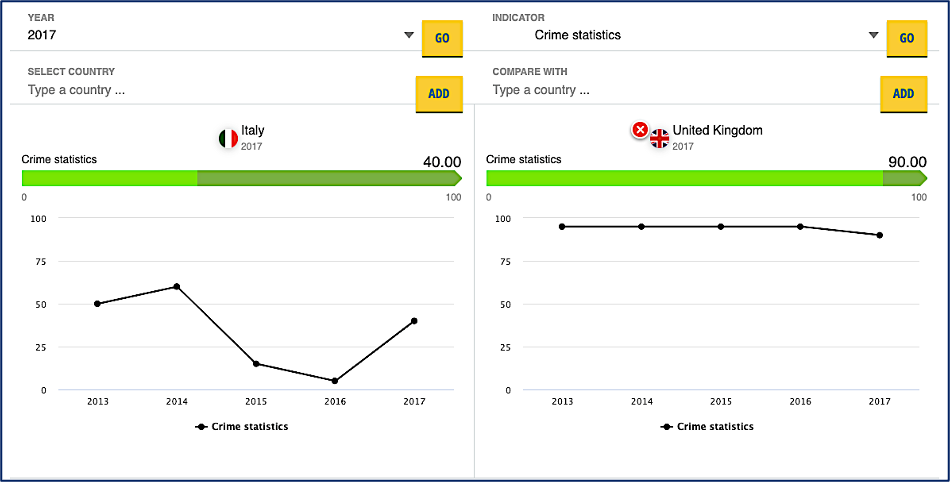
Fig. 1 - Data accessibility in Italy by category (year 2017) - comparison with UK

Comparing Italy to the UK for example, two countries that could be defined - on some level - at the extremes of the same spectrum, it emerges that in the field of crime data-transparency Italy presents an overall score (on a scale ranging from 0 to 100) of 40.00 against the UK's 90.00, here are some more specific numbers (see fig. 2):
- Open data on crime and decay: UK (90.00) VS Italy (40.00)
- Mapped data, WEB GIS: UK (100.00) VS Italy (50.00)
Fig. 2 - Comparison of open data between the UK and Italy (year 2017) - topic 'Crime Statistics'
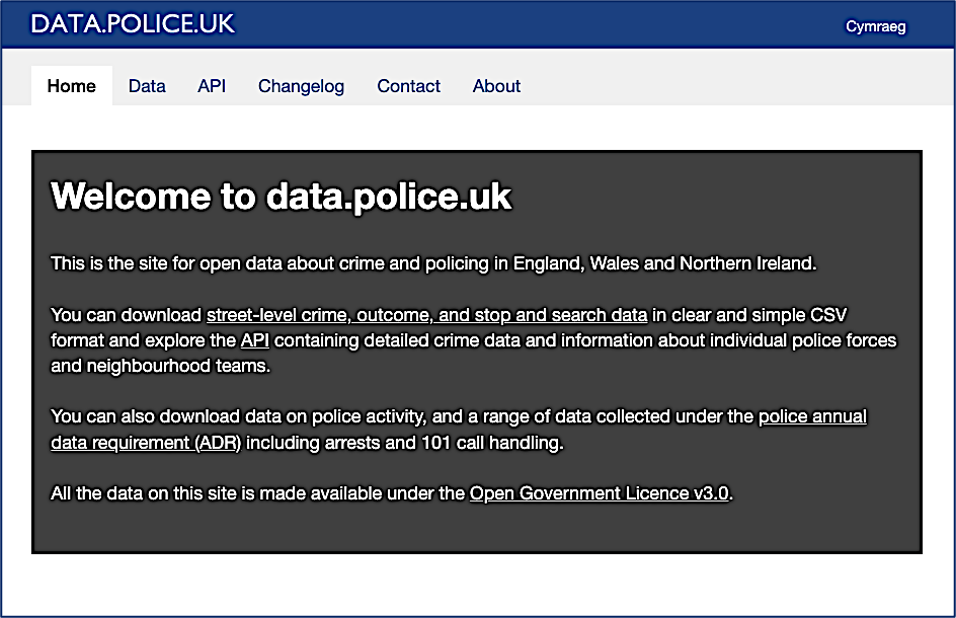
In addition, there is a government platform called 'Open Data - Police UK8', through which any citizen/entity in the world can freely download all geo-localised crime data up to date (see figure 3).
Fig. 3 - Government platform 'Open Data - Police UK'
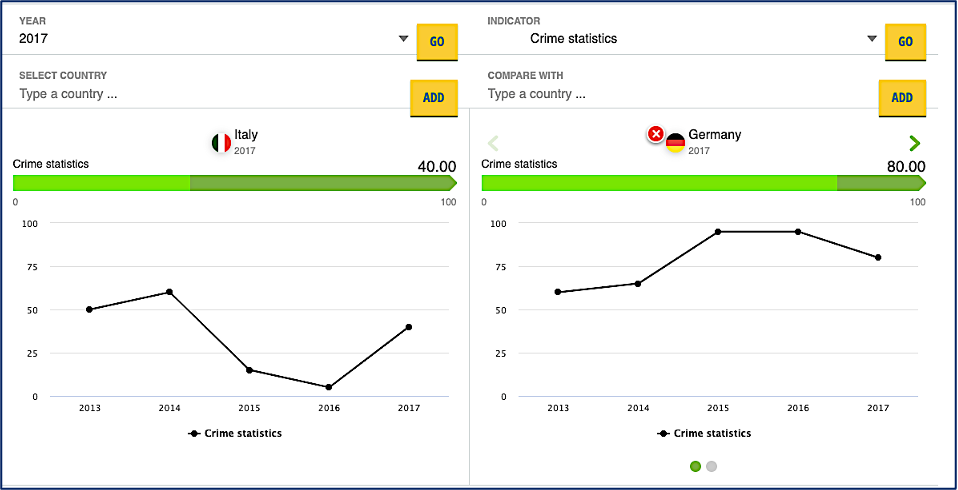
Continuing the comparison on an European level, Italy, compared to Germany, presents an overall score of 40.00 vs. 80.00, below some more specific numbers (see fig. 4):
- Open data on crime and degradation: Germany (80.00) VS Italy (40.00)
- Mapped data, WEB GIS: Germany (100.00) VS Italy (50.00)
Fig. 4 - Open data comparison between Germany and Italy (year 2017)
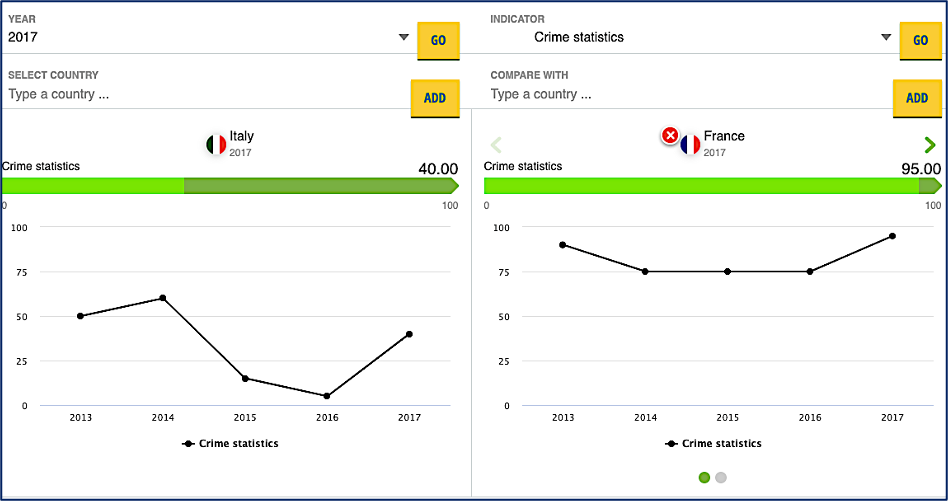
Again, Italy, compared to France, has an overall score of 40.00 versus 95.00, here are some more specific numbers (see fig. 5):
- Open data on Offences and Degradation: France (95.00) VS Italy (40.00)
- Mapped data, WEB GIS: France (70.00) VS Italy (50.00)
Fig. 5 - Open data comparison between France and Italy (year 2017)
In light of the above, a question arises: what kind of consequences can this difference generate directly, or indirectly?
The lack of accessible geo-localised data on urban crime means that many intervention policies (both private and public) are not yet data-driven on this issue but rely only and exclusively on qualitative variables (equally important but insufficient if not integrated with numerical-quantitative ones).
On the other hand, how could a Public Administration, a Foundation, an Association or even a group of aware and pro-active citizens plan an urban requalification intervention if the (geo-localised) data on episodes of crime and degradation are not accessible? Everything becomes extremely more complex and potentially ineffective, hence the need to overturn the paradigm of participatory urban security.
This change does not presuppose, obviously, an access to the entire data bank of the SDI, insofar as it is inapplicable, dangerous and, above all, ethically unjust (given the high presence of sensitive data and material). It is rather intended to mean the possibility for private citizens, companies, public administrations and all the organisations of the Third sector, to access only the geo-localized data (deprived of any sensitive information) on criminality and urban decay. Below is an example of 'information fields' that - although not affecting sensitive/personal data - could make a given crime/degradation event usable in urban risk analysis:
- Event category (e.g., robbery, theft, violent crime, counterfeiting, drug dealing, etc.)
- Sub-category of event (e.g., Commercial Robbery, Residential Theft, etc.)
- Date of event (e.g., 01/01/2021)
- Time of the event (e.g., between 8:00 and 12:00)
- Address (e.g., Via Rossi 1, 00000, Rome)
- Latitude and Longitude (fundamental for the geo-localization of the event)
Of course, along with a hypothetical greater sharing of data on crime and urban decay by the Public Safety Authorities, it is necessary to encourage an increasingly substantial activism on the part of citizens. The latter, in fact, are called upon to contribute with information and data which, unfortunately, are often not available to Law Enforcement Agencies.
In this regard, back in 20049, Dr Maurizio Fiasco - through an interesting article published on the State Police website - quoted "The average number of reported cases is 34% and is partly influenced by the fact that attempted crimes don’t get reported (only one in four is followed by a report to the authorities). While it may seem obvious that citizens report almost all car thefts (94%), the high percentage of robberies that remain unreported is cause for reflection: 50.4% of those committed and 68.9% of those attempted. Why such a low tendency? The hypotheses are based on the balance between the costs and benefits of contacting the police and the seriousness of the consequences of the crime. It is also influenced by whether contact between the perpetrator and the victim has taken place or not. A burglary committed while the victim is absent from home has different emotional repercussions from a robbery during which the offended party has run into the aggressor. In other words, in case of events affecting one individual, such as assaults and robberies, the most frequent motivation for reporting is to inform the police (43.2% if they met the offender and 35% if they didn’t) or to prevent the perpetrator from repeating the crime (50.3% if they met the offender and 17.3% if they didn’t). On the other hand, these motivations were scarcely reported for pickpocketing and theft of personal belongings.
This reflection, although outdated, is still deeply relevant considering what was pointed out in the ISTAT (Italian National Statistical Institute)10 year-end report 2020, that "The data concerning the police force survey do not represent a complete picture of crime". This aspect is, in some ways, extremely invalidating as it could prevent the Public Safety Authorities from implementing effective crime fighting and containment measures. However, even though the number of reports is still relatively low today (especially for certain types of crime), it must be said that citizens have been able to build a dense network of platforms, especially digital ones, capable of collecting very significant amounts of data on crime/degradation. In other words, it could be said that blogs/forums/social networks/security websites have become the digital noticeboard where citizens tend to crystallise the results of their HUMINT11 activities.
Therefore, it is evident that citizens are very willing to 'share information for the protection of common/public spaces', but it is also necessary to put them in a position where they can convey the same data to the competent authorities. Training, information, and dissemination activities can be an excellent tool to make citizens increasingly aware of the need to systematise the data/reports they collect in order to share them with the police, as well as to increasingly digitalise the reporting procedures. In this sense, the Mine Crime project that we coordinated aims to harmonise the collection of data reported through multiple digital platforms, systematising them in a single database and transforming them into risk indices to support mitigation activities by companies, law enforcement agencies, public stakeholders, and citizens.
In conclusion, it is only through the overall sharing of data, information, and useful materials on urban security that the public, by integrating with the private sector (an essential component of modern society), will be able to face the great challenges that the 'security of the near future' will inexorably pose to us. We have excellent examples of countries that could serve as models of 'good practices'. There is nothing left to do but start now.
Giacomo Salvanelli - Mine Crime CEO
[1] https://doi.org/10.4000/qds.425
[2] https://www.poliziadistato.it/articolo/banca-dati-per-le-forze-di-polizia-1
[3] https://www.carabinieri.it/media---comunicazione/rassegna-dell-arma/la-rassegna/anno-2012/n-1---gennaio-marzo/studi
[4] Criminal proceedings, secret or classified - Art. 144 and 329 - and, therefore, accessible only to Officials of the Judicial Police assigned to the "Services" of the Judicial Police provided for by Art. 56, Code of Criminal Procedure, to the D.I.A., to the Central Direction for the anti-drug services and to the central Offices of the State Police or of the Carabinieri deputized to fight terrorism.
[5] Geolocation: identification of the geographic position of people, events, vehicles or objects that are stationary or moving
[6] https://www.un.org/development/desa/en/news/population/2018-revision-of-world-urbanization-prospects.html
[7] https://opendatabarometer.org/?_year=2017&indicator=ODB
[9] https://poliziamoderna.poliziadistato.it/articolo/56c49118a17f6125389515
[10] https://www.istat.it/it/archivio/244848
[11] http://www.osservatorioanalitico.com/?p=8888
More...

Throughout time and culture, human beings have always had the urge to take goods that are not their own. Entire civilisations of the past have based their existence and success on this attitude. It is thanks to laws, moral codes, and the judgement of our peers that this instinct is, for most of us today, repressed and does not manifest itself.
This perspective might be annoying, but after all, criminal behaviour is only one of the many ways of acting and behaving in society. Therefore, in order to know, prevent and combat crime, it is necessary to know the social factors, the psychological dynamics, and the interrelationships between individuals, groups and the environment that underlie human behaviour.
In particular, if we deal with home burglaries and their dynamics, we have to consider that the burglars have every interest in keeping us in a condition of irrationality when we think of them and their activities. Dehumanising[1] them, blurring them into an indistinct outline or into the undifferentiated, generic, and not too veiled racist categories of 'foreigner', 'outsider’, 'gipsy', 'junkie' prevents us from focusing on their way of thinking and acting and distances us from actual solutions. It’s true, some individuals belonging to these categories are often perpetrators of predatory crimes - sometimes disorganised and with uncertain outcomes - as they are the individuals who do not belong to these categories, but this is not the point. Instead, we need to re-establish the human dimension of the predatory act. We need to humanize the offender (not for do-goodism, a category unknown to criminological disciplines) but because this is the only way we will be able to understand how to counteract their activities.
Burglars are human beings who act rationally, and we can, therefore, interpret their way of thinking and prevent their actions. Imagining them as an invisible and idealised enemy only puts us at risk of underestimating their rationality, and therefore their expertise.
Burglars try to achieve their goals by investing the minimum amount of resources and taking the fewest possible risks. Their logic is not dissimilar to that of an entrepreneur or consumer: 'get the most for the least'. This does not mean that every burglary is based on a careful consideration of risk and reward, but it does imply that the burglar’s choice of target is not random, but influenced by cost and benefit considerations.
Despite individual preferences (often governed by changing environmental factors), decades of research have shown how recurrent are the modus operandi of burglars with respect to the sequence of the decision chain, the nature of the environmental signals used to search for the optimal target, and the method of search within the property.
The studies carried out so far by specialists (criminologists, sociologists, and psychologists) show us less impulsive burglars, governed by a certain rationality, who uses a heuristic approach (a procedure that makes it possible to predict an outcome, which must then be validated) based on the decisions and actions they have carried out in the past. They depict a typical burglar as someone who typically makes the initial decision to commit a burglary and then embarks on a series of chain decisions until the burglary is accomplished.
The instrumental need for money is overwhelmingly the main motive for committing a burglary, but many studies have also highlighted the role of an increased sense of physiological arousal that the burglar experiences before, during and after the burglary. Although burglary remains primarily an instrumental crime (as opposed to expressive crimes, such as crimes of passion or sexual assaults), it would be a mistake to underestimate the role played by emotions in the burglar's cognitive processes.
Scholars are unable to determine whether the burglars consider the harm to their victims when choosing their target. In most cases, this concern seems to be absent (depersonalisation of the victim). If some sort of empathy is present, it is likely that the burglars will implement some sort of self-censorship in order to be able to accept the fact that they will commit the predatory act even if it will cause problems to others.
It should be borne in mind that more experienced and better organised perpetrators of property offences often tend to minimise the consequences of their offences, so that in the event of arrest and judicial involvement, they would be able to benefit from a less severe sanction than it would be the case for an aggravated offence.
It is equally probable that in the burglar’s mind techniques of neutralization are set in motion, such as the "minimization of the damage" (D. Matza, 1969)[2], in order to allow the burglar to relieve themselves and to silence their possible feelings of guilt.
The understanding of the functioning of the burglar's mind around and within the scene of the burglary is based on experimental research carried out over the last 30-40 years. These have highlighted the presence of unconscious processes in the burglar's mind, which become automatic over time, through practice and recognition of environmental signals, together with more deliberate and conscious decisions and behaviours. These are processes very similar to the ones of other categories of people and professions.
Indeed, there is no reason to think that burglars should differ from the rest of the human beings in terms of the decision-making experience.
The empirical model postulated by Nee and Ward[3] comprises four stages of the decision-making process occurring in the days, hours or minutes prior to the commission of the burglary:
- Automatic, unintentional, pre-conscious assessment of the environment;
- Automatic recognition of environmental cues related to the intended crime during target selection;
- Activation of complex cognitive patterns, built up through practice, which allow instant and compensatory access to a rich number of examples and a heuristic procedure (which does not follow a clear path, but relies on intuition and the temporary state of circumstances). This in turn leads to:
- Quick responses to environmental cues that have worked in the past, in the form of execution of a script based on proven methods, allowing for a relatively automatic commission of the predatory act.
During their daily activities (work or leisure) burglars may have noticed the high market value of a location associated with elements of vulnerability. Their superior situational awareness and selective attention to signals associated with predatory activities will automatically and unconsciously attract their attention.
Burglars go to a specific area that they consider favourable to burglary and based on their experience look for a suitable target that will allow easy gain at low risk. Burglars may also intentionally go to an area where they have already committed other burglaries, knowing that other accessible opportunities will present themselves in that area. In both cases, when they are at the chosen location, they will evaluate the combination of different environmental cues in order to choose the most favourable target.
The idea that burglars scan the environment as part of their routine activity has been known since research on predatory offenders began.
In 1984, researchers Bennet and Wright[4] coined the term 'seeker' to indicate that burglars choose their target using previously learned environmental cues that indicate that the property being attacked has vulnerabilities. That indicates that the burglar, in most cases, does not have an opportunistic or impulsive approach.
Typically, the decision to commit burglary emerges before the choice of target. Different aspects of the observed properties may attract or deter the burglar (the assessment is made automatically and instantaneously as soon as the burglar arrives in a vulnerable environment).
If burglars are discouraged, they will look for an easier and equally profitable target nearby. In the new location, burglars may detect new targets that meet their needs or that could yield better results. This encourages them to undertake new explorations.
Exploring unfamiliar areas is a little riskier and burglars will take care not to appear out of place and will try to feel comfortable with passers-by and residents who may be watching them (especially if a Neighbourhood Watch programme is in operation in that area), passers-by and residents that the burglars will monitor throughout the search for the target.
The more experienced the burglars, the less discouraged they are by the security features of the property. They have higher levels of skill and greater self-efficacy. They feel safer exploring unknown territories further from their home than their less experienced counterparts. As a result of their increasingly rich and interconnected cognitive patterns, they can draw useful inferences even from small amounts of information with which they are partially familiar. This explains the (often excessive) confidence seen in experienced burglars.
Features assessed by burglars include property furnishings and valuables that can be seen both inside and outside the property, as well as vehicles. These considerations, along with those of accessibility (detached property, semi-detached, side or back access, dense vegetation in or around the property, etc.), will allow for a better assessment of the property and increased opportunities for entry and exit. The most common method of access to property by a burglar, however, remains through an open window or door.
There is an abundance of information and signals in the environment that burglars interpret as attractive or deterring when assessing their potential targets. Scholars wondered whether particular signals or classes of signals have more influence than others on the burglar's decision-making process. The answer was no. It appears that the decision-making process of the burglar is complex and dynamic, and it is a process in which different signals in the environment combine and compensate for each other (suggesting dense, interrelated patterns). The meaning of these signals from the environment may also change based on time, or there might be multiple ones at the same time. For example, the presence of many trees and vegetation in a garden may increase the perception of the overall value of the property, but will certainly also reduce its security, allowing the burglar to hide and assess the potential target more accurately on entry points and the presence of the owners without being seen. A back and side access similarly often indicates a larger and richer property, but also increases the opportunity to enter it from different points.
Burglars return to the location where they spotted a vulnerable residence noticed during a routine activity (e.g., during a work or leisure activity) using environmental cues (wealth, accessibility, etc.). They are highly likely to make several visits to better assess the target and decide the best time of day to carry out the heist.
Burglars also steal on commission. Once the goods to be stolen have been identified, other indications (such as the presence of the owners, accessibility, and security systems) are used to decide when to actually commit the burglary. Once the target has been chosen, its characteristics will determine which way the burglar will enter.
In accordance with the mental processes used to assess the target from the outside, during the burglary the burglars will undertake a 'habitual, proven search', a hybrid of what has worked in the past, which has given them higher results at lower risk, i.e., allowing them after the burglary to leave the property unscathed as quickly as possible. It seems reasonable to assume that burglars continue to use superior schematic knowledge to get out of the property and away from the burglary site, on foot or by other means.
Searching then becomes a natural instinct, a routine that allows them to concentrate on what is happening around then and, at the same time, look for objects to steal. Most of the concentration, however, is on the risk of someone finding out.
Internal layouts that are obvious and familiar, or even properties that they have already plundered (or similar to those), and the adoption of the heuristic of 'tracing', will facilitate their research and learning process.
Based on research carried out by the researchers, hundreds of convicted burglars interviewed stated that they would target the master bedroom first, then the other bedrooms and finally the rest of the house if they had the time.
Several studies also report that most burglars prefer a target that is not occupied by residents. The same sources report that burglars only enter occupied properties if no other target is available and provided that the occupants are asleep, but always taking care not to encounter their victims. The presence of residents is one of the strongest deterrents. Residents, if they realise that a burglar is trying to break in, can react and/or call the police. Confronting the owner is an experience that burglars want to avoid like the plague and may force them to retrace their steps.
Studies carried out in 2014 in the UK and the USA by criminologist E. Taylor[5], involving 40 convicted burglars, found that some burglars refrain from choosing their targets if there are children or elderly or disabled people in the home. However, the researchers were unable to demonstrate that some homes are spared because burglars demonstrate empathy [an affective response derived from an understanding of another emotional state or condition] for these specific categories of victims. This is a topic that deserves further investigation.
Burglaries and robberies
Every now and then there are reports of burglars breaking into houses armed to steal. In these cases, it is a robbery. Let us assume, based on what has been said so far, that the advantage the robbers think they will gain from it outweighs the high risk they are taking. In such cases, therefore, it is better not to run into them, because if robbers accept the risk of running into their victim, it is never good news for the victim.
Robbers are often people with no scruples and no empathy for the victim. We cannot exclude that we are in the presence of an antisocial personality disorder[6]. Their lack of empathy fosters their antisocial and criminal behaviour, allowing them to ignore the harm done to their victims by opening the door to socially and humanly unacceptable actions. Robbers usually move around in fast cars. They are commuters who move from county to county or even from country to country. They prefer to target isolated houses in the countryside, suburbs, or hamlets, preferring those close to the road to ensure an easy escape route. They almost always break in at dinnertime to take the whole family hostage, using violence on their victims to force them to reveal where the safe or money is hidden. They often have their faces disguised, wear gloves and leave few traces. In such cases, the best strategy is to reduce the damage by not making the criminals nervous and by putting protection of life before protection of property.
Experienced and inexperienced burglars
“Experienced burglars”, whose modes of operation are all similar, tend to steal fewer but more valuable items. Less experienced burglars, on the other hand, grab whatever seems valuable to them. In an experiment conducted in the UK in 2006 by psychologists Nee and Meenaghan[7], involving 50 prisoners convicted of burglary, the researchers found that more experienced burglars had a greater ability to recognise high-value goods. For example, they avoided electronic gadgets that depreciated quickly and focused on smaller items such as jewellery, drugs, electronic gadgets that did not depreciate quickly and cash. In the same simulation, burglars spent significantly more time in areas of the house where they could find higher value items. Goods such as silver, porcelains, antiques and works of art (with a higher commercial value) are stolen much more rarely because it is too risky to get rid of them, indicating that the burglar uses a clear strategy to avoid being identified after committing the burglary.
Selection and resale of stolen goods
The size of the stolen goods is related to the ability of the burglars to transport them. Isolated houses (perhaps without neighbours who may be aware of their presence) and the possibility of approaching by car, together with an easy escape route, will allow the burglars to transport larger items. In other cases, they will aim for small, easily transportable items.
Scholars know almost nothing about the cognitive and emotional processes that take place in the hours or days following the burglary, apart from the way in which the burglar disposes of the stolen goods. It would therefore be useful to gain a better understanding of what goes on in the burglar's mind, not only during the time of the burglary itself (planning, preparation, execution), but also afterwards, when the stolen goods are disposed of.
Let us empirically assume that after the burglary the priority in the burglar's mind is to convert the stolen goods into cash as quickly as possible (it is therefore not surprising that burglars pay special attention to who they sell the stolen goods to). We also assume that few of them keep stolen goods (perhaps weapons are an exception) so as not to be linked to the burglary in case of a search. It would be interesting to better understand when and why the burglars use the stolen goods for himself or when they decide to put them on the informal and clandestine market. From this choice it could be inferred whether the offender is more or less occasional or more or less organised. It should also be borne in mind that, in the latter case, there may be the possibility of finding the same goods again through other channels, which will lead to the commission of other forms of crime, such as laundering or self-laundering.
Most burglars do not make much effort to obtain better prices from fences, accepting offers that meet their immediate needs. Experienced burglars, on the other hand, tend to bargain for more acceptable prices from fences and are much more careful in choosing to whom they sell their stolen goods. They rarely sell to friends or family members.
A study by J. Clare (2011)[8] suggests that for many burglars the ways to avoid being caught after a burglary may be much less developed and sophisticated when compared to the superior skill demonstrated during the execution of the burglary itself.
We should capitalise in terms of prevention on the fact that we know that burglars entering a home expects an environment with which they are 'familiar'. An environment in which their routine and expert behaviour works well without having to think too much about it.
While the burglary is in progress, sudden and unexpected events may lead the burglar to give up due to cognitive overload and the resulting anxiety. This seems to be a potential deterrent that is not yet sufficiently exploited in predatory crime prevention techniques.
Presenting the burglars with unexpected environmental layouts[9] or sudden noises and voices could deter them and destabilise the overconfidence they have in themself based on their accumulated skills.
Leonardo Campanale - EUNWA President
[1] It is a radical form of devaluation that consists in the denial of the other's humanity. On this subject, see Deumanizzazione, Chiara Volpato, 2011 Laterza.
[2] Matza D., Becoming deviant, New York, 1969.
[3] Ward, T. & Nee, C. (2009). Surfaces and depths: evaluating the theoretical assumptions of cognitive skills programmes. Psychology, Crime and Law (special edition on Offender Cognition and Emotion), 15, 165-182.
[4] Bennett, T. &. Wright. R. (1984). Burglars on burglary: prevention and the offender. Aldershot: Gower.
[5] Emmeline Taylor (2014). Honour among burglars? How morality and rationality influence the decision-making processes of convicted domestic burglars. Sage Journals. Volume: 14 issue: 4, page(s): 487-502.
[6] Diagnostic and Statistical Manual of Mental Disorders, Fifth Edition [DSM-5]
[7] Nee, C., & Meenaghan, A. (2006). Expert decision-making in burglars. British Journal of Criminology, 46(5), 935-949. doi: 10.1093/bjc/az1013
[8] Clare, J. (2011). Examination of systematic variations in burglars' domain-specific perceptual and procedural skills. Psychology, Crime & Law, 17(3), 199-214. doi: 10.1080/10683160903025810
[9] For example, darkening the room by setting off alarms, which are already widely used, filling the house with smoke.

One of the many questions we ask ourselves when our house is burgled is 'Why did the burglars choose my house? The truth is that there is no single answer. There are many factors that can contribute to the burglar's choice. Let's look at some of them.
Occasional and organised burglaries
Let's start by dividing home burglaries into two main categories: occasional burglaries and organised burglaries.
We are aware that such a clear-cut division of the type of burglary may not always correspond to the reality of the facts, since in some cases an occasional burglary may later turn into organised burglary, or an organised one may include, during its execution, the opportunity to steal something else if the occasion arises. There are no 'only' organised or 'only' occasional burglars, as the two modes of execution may overlap in the same offender.
However, in general, these two modalities, that have different effects on our property and that are prevented by slightly different strategies, belong to two different categories of offenders, operating in different ways.
Let us begin by describing the two methods and their similarities and differences.
In a casual burglary, in most cases, the burglar does not know our habits, neighbourhood, and wealth, or know very little about them. They move around the area they have chosen in search of opportunities, using primitive intelligence techniques. For example, they may leave a stone or a branch in front of a house’s door or garage and come back a couple of days later to check if the object has been removed, to understand if the resident is home or not. The burglar could also simply rely on the fact that a house represents an immediate opportunity (an open window, an object to steal clearly visible from the street, etc.).
On the contrary, in an organised burglary where the place to go stealing is defined priorly, offenders need to know our habits, our home and the neighbourhood context; in fact, they observe them directly with targeted surveys and/or acquire information from other sources (from the Internet, from neighbours, in bars, in their criminal environment). Neighbourhood Watch surveillance activities are used, in fact, to prevent, as far as possible, offenders from patrolling our area to acquire new targets or to gather information on already selected targets. The presence of Neighbourhood Watch signs also serves to discourage offender observation activities.
There is another aspect that differentiates the two types of burglary. Casual burglary is usually more invasive and destructive. After the execution of a casual burglary, we see houses turned upside down. Occasional burglars generally don’t know how much time they have available. They are therefore forced to rummage quickly and everywhere, starting from the most obvious places. Though they often overlook valuable items, if they are well hidden.
In general, the occasional burglar runs more risks than the organised one. The lack of information about the context, the victim's habits, and the presence of passive prevention systems in the house makes it a typical 'hit and run' theft, as the longer the burglary lasts, the more risks the occasional burglar may run.
On the contrary, organised burglars try to manage the risks of their activity with preparatory intelligence work. But even then, unless they have unlimited time at their disposal, they will have to deal with the unexpected, carefully managing the timing of the burglary.
What makes our house attractive to offenders
There are several factors that influence the choice of our home as a possible target for burglars.
For occasional burglaries, there are some elements that definitely favour them, for example the absence of residents. No burglar wants to meet the owner of the house they are robbing. A meeting during the burglary could lead to reactions and acts of violence that could make the burglar's position much more difficult if arrested. An isolated or unattended house is an ideal target for the opportunistic burglar. Holiday homes in the countryside, at the seaside or in the mountains should be particularly well protected with strong and reliable passive prevention systems.
Open or easily forcible doors and windows are a casual burglar's paradise, as the easy availability of the goods, visible from outside the home or when the offender has entered the home.
In order to prevent casual burglaries, it is vital to identify, eliminate or reduce structural and environmental vulnerabilities in our homes and those related to our behaviours.
For organised burglaries, the same factors apply as for occasional burglaries (and the related prevention methods), to which it must be added: the possession by the offender of information about what to steal, knowledge of our habits(absences, presences, routines), our vulnerabilities (weak points of the house and our behaviour), knowledge of our passive prevention systems. These are all information that the offender is able to obtain with accurate and, in some cases, sophisticated intelligence work.
Therefore, if we do not want to be the next victims of a home burglary, we need to reduce, as far as possible, the circulation of information about us, relating to our habits and routines, our whereabouts, our financial status, and our passive prevention systems, both in the real world and in the virtual world.
Leonardo Campanale - EUNWA President
