

Displaying items by tag: Neighbourhood Watch

A neighbourhood safety group should make it easier for people to seek help and feel at home in their streets. That purpose is compromised when residents themselves become targets of suspicion because of their appearance or background. For Neighbourhood Watch, a commitment to community safety must include the people who might otherwise be treated as outsiders.
A Guardian investigation published on 12 September 2026 identified at least 28 anti-migrant vigilante groups formed in the UK over eighteen months. [1] This is a journalistic finding, not an official census or evidence of a comparable trend across Europe. The investigation does not establish a connection between those groups and recognised Neighbourhood Watch schemes. It raises a separate but relevant question: how can community safety organisations make the boundary between civic participation and self-appointed enforcement unmistakable?
For EUNWA, the issue concerns the credibility of civic participation. Residents should be able to recognise what a legitimate neighbourhood group does, whom it answers to and how to raise a concern about its conduct. The distinction is not between people who care about safety and people who do not; it lies in what groups actually do, whom they target and whether they respect others’ rights.
Drawing the Line: Vigilance without Vigilantism
Neighbourhood Watch can give residents useful ways to act on concerns: sharing reliable prevention advice, encouraging reports of specific incidents to the appropriate authorities and helping neighbours reach support. Membership does not confer police powers or authority over other residents. Indeed, the Neighbourhood Watch Network advises that crime should be reported to the police or another appropriate reporting service, not to Neighbourhood Watch as though it were an enforcement agency. [2] National organisations should state these limits plainly in volunteer guidance and public communications.
One existing reference point is the Neighbourhood Watch Network, the national umbrella charity supporting Neighbourhood Watch in England and Wales. Its published ethics and standards require fairness, impartiality and respect for privacy. Volunteers are expected to make decisions based on facts, accept responsibility for their conduct and challenge or report discriminatory behaviour within the movement. [3] These are relevant examples for European discussion, not rules that can automatically be attributed to Neighbourhood Watch organisations in other countries.
Applying these principles requires attention to ordinary decisions. Consider a hypothetical neighbourhood message describing an unfamiliar person as suspicious without identifying any concerning behaviour. A coordinator should ask what was actually observed and stop speculation about nationality or religion from becoming an allegation. Where someone reports a specific threat or offence, the priority should be accurate information and an appropriate official response. A group chat must not become a vehicle for identifying, shaming or mobilising against individuals.
Nor should every community walk or public discussion about safety be equated with vigilantism. The warning signs are more specific: attempts to stop or question people as if exercising official powers, intimidation, discriminatory targeting, or calls for residents to take enforcement into their own hands. A group’s stated intention to protect its neighbourhood cannot excuse such conduct.
Accountability, Inclusion and Trust
The same care should shape volunteer recruitment and oversight. Organisations could discuss practical scenarios with prospective coordinators, including how they would respond to a discriminatory comment or a request to confront someone. Written responsibilities, a named point of contact, a complaints route accessible to non-members and a process for responding to breaches would make expectations easier to enforce. The England and Wales Network, for example, publishes guidance on withholding recognition from coordinators who breach national guidelines and removing non-compliant groups from its database. [4]
Inclusion also needs to be visible in whose concerns receive attention. A resident experiencing racist harassment should be able to approach a neighbourhood group with the same expectation of being heard as someone concerned about burglary. Local organisations could work with migrant associations and victim support services to understand barriers to participation. Invitations alone may be insufficient if residents have reason to doubt that their experiences will be taken seriously.
The England and Wales Network’s Hate Crime Community Ambassador project offers one model for examination. The published project page describes a trial in the Royal Borough of Greenwich, combining awareness work and encouragement to report with role-specific training, an application and interview process, and regular review sessions. [5] A programme description does not establish impact, nor does it show that the model has been implemented throughout England and Wales. European partners considering comparable roles should examine local training, supervision and ways to assess participants’ experiences.
Police partnerships should make responsibilities equally clear. Community groups need an agreed route for concerns, guidance on responsible information sharing and a way to discuss recurring problems. They should be able to question an inadequate response and seek explanations through appropriate channels. Such scrutiny is compatible with cooperation; it does not justify assuming the authority to control other people’s movements or demand explanations of their presence.
Political independence matters as well. Members may hold different views on immigration or public policy, but those views should not determine who receives help or who is treated as a suspect. A neighbourhood organisation’s activities and communication channels should remain focused on community safety rather than party-political mobilisation. This does not prevent members, acting as private citizens, from participating in lawful public debate.
EUNWA could turn these principles into a practical comparative exercise: examine how national Neighbourhood Watch organisations define volunteers’ roles, train coordinators, handle complaints and respond to misuse of their names or channels. Residents who have felt excluded or unfairly scrutinised should be heard alongside volunteers and police partners. The central test is whether commitments to safety and inclusion are reflected in everyday practice, including for those who have the least confidence that a neighbourhood group will stand beside them.
Sources
[2] Neighbourhood Watch Network, ‘Reporting a crime’.
[3] Neighbourhood Watch Network, ‘Ethics and standards of behaviour’.
[4] Neighbourhood Watch Network, ‘Frequently asked questions’ (safeguards for legitimate groups).
[5] Neighbourhood Watch Network, ‘Become a Hate Crime Community Ambassador’.
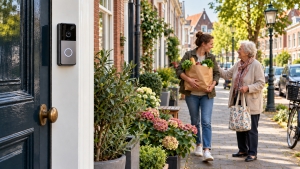
The digital neighbourhood promises greater connection and safer communities. But as private platforms move into a space once occupied by noticeboards, local groups and Neighbourhood Watch, an important question emerges: what kind of neighbourhood are we creating?
For generations, neighbourhood safety has depended on something remarkably simple: people noticing what happens around them and caring enough to act.
A neighbour checks on an elderly resident after a storm. Someone notices that a normally occupied house has been left open. A local resident reports a broken streetlight, helps find a missing pet, or passes useful information to the police. None of these actions requires sophisticated technology. What they require is a degree of trust, familiarity and willingness to take responsibility for the place where we live.
Technology, however, is rapidly changing the way that responsibility is exercised. On 16 September 2026, The Guardianreported that Amazon-owned Ring is preparing to launch its Neighbours service in the United Kingdom. Scheduled to be available through the Ring app from 21 October 2026, the service is intended to provide a digital space where residents can exchange safety information, community updates and alerts about lost pets. Significantly, people will not need to own a Ring camera or doorbell to participate.
At first sight, this may look like another neighbourhood social network. It is potentially something more important.
It raises a question that reaches well beyond one company or one application: as neighbourhood safety becomes increasingly digital, can technology help us watch out for one another without encouraging us simply to watch one another?
From the village noticeboard to the digital neighbourhood
Ring describes Neighbours as a modern community space. Residents will be able to define their local area and receive or post information relevant to it. The ambition is, in part, to provide a more focused alternative to the WhatsApp and Facebook groups that have become commonplace in many neighbourhoods. There is an understandable appeal to the idea.
Local digital networks can distribute useful information almost instantly. They can mobilise people who might otherwise never meet. A missing dog can become a neighbourhood search rather than an individual problem. Information about an incident can reach hundreds of residents in minutes. Someone who has relevant camera footage may be able to help an investigation.
In this sense, technology can strengthen something community-safety researchers have long recognised: the ability of residents to act together when a problem arises.
But a neighbourhood is not simply an information network. The distinction matters. Neighbourhood Watch, at its best, has never been merely about observing suspicious activity. It is about relationships: people knowing their neighbours, sharing responsibility for their surroundings and developing enough trust to cooperate with one another and with public institutions. A digital platform can facilitate those relationships. It cannot automatically create them.
When vigilance becomes suspicion
There is another difficulty. The same camera that records a genuine crime also records the delivery driver, the teenager walking home, the unfamiliar visitor, the neighbour’s children and the person who simply happens to stop outside a house.
What happens next depends not on the camera, but on the community. An image can be treated as information requiring context. Or it can become an invitation to suspicion.
This is not an entirely theoretical concern. Research into Neighbourhood Watch schemes in the Netherlands has identified the possibility that increased vigilance can also produce stigmatisation, profiling and excessive social control. Digital neighbourhood platforms can amplify this effect because observations that would once have remained between two neighbours can now be circulated instantly among hundreds or thousands of people.
The danger is subtle. A community may begin with the intention of making residents feel safer and gradually develop a culture in which unfamiliarity itself becomes suspicious. There is an important difference between saying “something happened and perhaps somebody can help” and “this person does not belong here”. Healthy community safety depends on preserving that distinction.
According to information released around the UK launch, posts on Neighbours will be subject to rules prohibiting, among other things, discrimination and speculation, with moderation involving both automated systems and human review. That is welcome. But moderation addresses only part of the question. The deeper challenge concerns the culture that develops around the technology.
Privacy does not stop at the front door
Smart doorbells occupy an unusual position. They are private devices, installed on private homes, but their field of vision frequently extends into shared or public space.
The UK’s Information Commissioner’s Office makes the implications clear. When domestic CCTV or a smart doorbell captures images beyond the boundaries of a person’s property – for example a public pavement, communal area or neighbouring property – data protection rules apply because identifiable images and voices are personal information.
The issue becomes even more significant when recording is combined with sharing.
Ring is rolling out stronger technical safeguards, including its TAKE – “Throw Away the Key Encryption” – system, and states that users control which recordings they choose to make available through Neighbours. The company also says that names and exact locations are not displayed alongside public Neighbours posts.
Such protections matter. Yet privacy cannot be reduced to encryption.
A system can be technically secure while still changing the social experience of a street.
The ICO’s own research into people’s relationship with personal data has captured this tension particularly well. Some participants regarded smart doorbells as useful tools for protecting their homes and families; others expressed discomfort at knowing that ordinary movements around their neighbourhood could be recorded and shared. The report observed that social expectations had not fully caught up with the technology. That may be one of the most important insights in this debate.
We have learnt remarkably quickly how to install cameras. We are still learning how to live together when almost every front door can become one.
A new relationship with the police
The issue becomes still more interesting when digital neighbourhoods connect citizens with law-enforcement agencies. In the United States, Ring’s Community Requests system allows public-safety agencies to ask residents voluntarily for video relating to a particular investigation. Ring states that participation is optional and that agencies are not told who viewed a request but declined to provide footage. The feature is not included in the initial UK launch, although Ring plans to introduce it later. It is particularly significant because it illustrates how the architecture of community policing may be changing.
Traditionally, cooperation between citizens and police has been mediated by human relationships: local officers, community organisations, residents’ groups and Neighbourhood Watch coordinators. Digital platforms introduce another participant into that relationship – the technology provider. The model therefore changes from a relatively simple relationship between citizen, community and police to one that may also involve a private digital intermediary.
This does not necessarily make the relationship better or worse. It does, however, make questions of governance, transparency and accountability much more important. Who establishes the rules? Who decides what residents see? How are reports prioritised? What information is retained? How are mistakes corrected? And how can communities ensure that the technology supports cooperation rather than gradually defining what cooperation means?
These are questions European community-safety organisations should be asking now, rather than after such systems have become part of everyday life.
Technology and social trust
There is a broader question behind all of this: what actually makes a neighbourhood safer? Cameras may provide evidence. Alerts may distribute information. Artificial intelligence may identify patterns. Platforms may connect people who have never spoken before. But none of these things is synonymous with trust. Indeed, technology can push neighbourhoods in opposite directions.
Used well, a local digital network can strengthen reciprocity. Someone asks for help and discovers that neighbours are willing to provide it. Residents share useful information. People who previously lived beside one another as strangers begin to cooperate. Small acts of mutual assistance accumulate, and a stronger sense of community can emerge.
Used badly, exactly the same infrastructure can produce the opposite effect: constant alerts, circulating images of strangers, speculation about unfamiliar behaviour and an exaggerated perception that danger is everywhere. The difference between the two outcomes is not primarily technological. It is social.
A safe community is not one in which everybody monitors everybody else. It is one in which people have enough trust in one another to recognise when attention is needed, enough judgement not to turn difference into suspicion, and enough confidence in public institutions to know what to do when something genuinely concerns them. This is where the experience of Neighbourhood Watch remains particularly relevant.
Who owns the digital neighbourhood?
Perhaps the most important question raised by the arrival of platforms such as Neighbours is therefore not about cameras at all. It is about ownership – not ownership of the technology, but ownership of the social space that technology creates.
Traditional neighbourhood organisations are rooted, however imperfectly, in communities themselves. They have coordinators, volunteers, relationships with local authorities and police, codes of conduct and accumulated experience. Their legitimacy ultimately depends on the people who participate in them.
A commercial platform operates differently. Its architecture, rules, moderation systems, categories and future development are determined by a private company. Again, this is not an argument against private technology. Commercial innovation can provide tools that community organisations and public authorities could never develop independently. But the distinction should not disappear simply because the technology is convenient.
If digital neighbourhood platforms increasingly become places where residents report concerns, exchange security information and interact with public-safety organisations, they are no longer merely communication tools. They become part of the infrastructure through which communities understand safety. That brings responsibilities with it.
Watching out for each other
The future of Neighbourhood Watch will almost certainly be more digital than its past. That should not be something to fear. Technology can help communities communicate more quickly, include people who cannot easily participate in traditional meetings, coordinate assistance and provide valuable information when incidents occur. Used carefully, it may strengthen community resilience and citizen–police cooperation. But the purpose must remain clear.
The goal of Neighbourhood Watch is not to create neighbourhoods in which everyone is under observation. Nor should technology encourage residents to divide the people around them into those who “belong” and those who appear suspicious. The goal is to create communities in which people look out for one another.
That requires principles which no camera or algorithm can provide on its own: proportionality, inclusion, privacy, accountability, good judgement and, above all, trust. As digital platforms move further into the field of community safety, Europe has an opportunity to shape that development rather than simply adapt to it afterwards. The question is therefore not whether technology belongs in the neighbourhood. It already does. The more important question is what kind of neighbourhood we want technology to help us build.
References and further reading
Gibbs, S. (2026), Amazon to launch Ring ‘neighbourhood watch’ app in UK amid US privacy fears, The Guardian, 16 September 2026.
Information Commissioner’s Office (ICO), Home CCTV systems – guidance covering domestic CCTV and smart doorbells.
Information Commissioner’s Office (ICO), Data Lives – Year 2 Report – research into public attitudes towards personal data and emerging technologies, including smart doorbells.
Lub, V. (2018), Neighbourhood Watch: Mechanisms and Moral Implications, British Journal of Criminology, 58(4), pp. 906–924.
Ring (2026), Neighbours by Ring; Neighbours Privacy and Data; Community Requests; Using TAKE (Throw Away the Key Encryption).

What if Neighbourhood Watch protects more than our homes?
Imagine an older person who lives alone. Every morning, she opens the shutters of her house at roughly the same time. One morning, they remain closed. A neighbour notices.
He is not a police officer, a doctor or a social worker. He is simply someone who knows who lives next door - and knows that something is different.
That small act of attention tells us something important about community safety. A safe community is not only a community where somebody notices a suspicious person, an unfamiliar vehicle or an open window. It is also a community where somebody notices the absence of a neighbour.
For those of us working in Neighbourhood Watch and community safety, this simple example opens up a wider question. Could the relationships that grow around a Watch scheme matter not only for crime prevention, but also for the health and resilience of a neighbourhood? Research on loneliness and social isolation gives us good reason to explore that possibility. It does not, however, allow us to assume that setting up a Neighbourhood Watch group automatically creates social connection. The way a scheme works - and the relationships it encourages - matters.
Loneliness is not the same as being alone
The distinction between loneliness and social isolation is fundamental. Social isolation describes the objective structure of someone's social world: how frequently they meet other people, whether they live alone, how large their social network is and whether they participate in social organisations.
Loneliness is different. It is subjective. It arises when there is a gap between the relationships people have and the relationships they feel they need. A person may therefore have relatively few social contacts without feeling lonely. Conversely, somebody surrounded by colleagues, relatives and neighbours may experience profound loneliness. This distinction has become increasingly important in research on ageing and health.
A 2025 population-based study using data from the English Longitudinal Study of Ageing (ELSA) followed adults aged 50 and over for up to 14 years. The researchers examined 6,031 people and investigated the relationship between loneliness, social isolation and multimorbidity - the presence of two or more long-term health conditions.
Among participants who did not initially have multimorbidity, loneliness was associated with a 38 per cent higher relative hazard of subsequently developing multimorbidity, even after adjustment for demographic characteristics, social isolation and health-related behaviours such as smoking, alcohol consumption and physical activity. The relationship also appeared to work in the opposite direction: people with multimorbidity had a 55 per cent higher relative hazard of subsequently developing loneliness.
The researchers therefore identified a significant bidirectional association between loneliness and multimorbidity. Importantly, this was an observational study. It cannot demonstrate that loneliness directly causes chronic disease, nor that chronic disease inevitably causes loneliness. Unmeasured factors may contribute to both. Nevertheless, following the same population over many years provides important evidence that health and social connection may interact throughout the ageing process.
It suggests the possibility of a difficult cycle: loneliness -> poorer health -> reduced activity and participation -> greater loneliness. Breaking that cycle may require us to think about health not only in hospitals and clinics, but also in neighbourhoods.
A global public-health issue
This is no longer a marginal field of research. In 2025, the World Health Organization Commission on Social Connectionpublished its report From loneliness to social connection: charting a path to healthier societies.
The WHO argues that loneliness and social isolation have serious but still under-recognised consequences for health, well-being and society, and calls for social health to receive greater attention alongside physical and mental health.
For community-safety organisations, one point in the WHO's work is especially relevant. Social connection is not only an individual matter. Stronger social bonds are associated with greater cohesion, and communities in which people are connected may be better able to respond together when difficulties arise.
That is very close to the territory in which Neighbourhood Watch operates. The WHO evidence does not tell us that Neighbourhood Watch produces these outcomes. What it does is give us a reason to look more closely at whether a well-designed scheme can create opportunities for familiarity, trust and mutual support to grow.
From watching places to knowing people
Neighbourhood Watch has traditionally been understood primarily through the lens of crime prevention. Neighbours observe their surroundings. They recognise unusual situations. They share information. They report concerns. They cooperate with law enforcement and local authorities. All of this remains essential.
There is evidence that Neighbourhood Watch can contribute to crime reduction. A systematic review published by the Campbell Collaboration, examining studies that had evaluated the effectiveness of Neighbourhood Watch programmes, found an overall reduction in crime. The authors nevertheless noted differences in the quality and comparability of the studies and pointed out that it was not always clear through which mechanisms the programmes produced their effects.
The uncertainty about how Neighbourhood Watch works is important. One possibility is easy to overlook: before a crime is prevented or a concern is reported, neighbours may simply begin to know one another.
Repeated encounters make people familiar. Over time, familiarity can make it easier to trust, exchange information, ask for help or offer it. None of this is guaranteed, but these ordinary interactions are part of how a sense of belonging can develop.
Seen in this way, the familiar Neighbourhood Watch sequence - observation, reporting, crime prevention - is only part of the story. Alongside it may be another process in which neighbours become familiar, begin to trust one another and, eventually, become more willing to act together.
This is a possibility, not a proven chain of cause and effect. But the distinction is worth making. In one model the neighbour is mainly another pair of eyes. In the other, the neighbour is someone with whom a relationship exists.
A neighbourhood experience from Vienna
An experience from Vienna offers a simple illustration of what this can mean in practice. At the founding event of the neighbourhood association proNACHBAR, some residents met again after having lost contact despite living close to one another for decades. Others introduced themselves to neighbours for the first time. One surprisingly practical issue emerged: many people did not even have their neighbours' telephone numbers.
What followed was not a formal care system, but something much simpler - the possibility of asking someone nearby for help. In one case, an older resident who felt threatened by a stranger trying to enter her home felt safer after exchanging telephone numbers with a neighbour. In another, an 80-year-old bedridden woman called for help through an open window; a neighbour responded, helped her and then contacted the care organisation.
These experiences are anecdotal and should not be treated as evidence of the effectiveness of Neighbourhood Watch. But they illustrate an important point: living close to someone does not necessarily mean knowing them. Sometimes the first contribution of a neighbourhood initiative is simply to turn physical proximity into human connection.
Noticing what disappears
Consider again the closed shutters. Neighbourhood Watch usually teaches us the value of noticing something that appears: an unfamiliar vehicle, suspicious behaviour, damage to a property. Social connection teaches us something complementary: the importance of noticing something that disappears.
The neighbour who has not been seen for several days. The older resident who usually walks the dog every morning but has suddenly stopped. The person who normally participates in the local group but no longer replies. The lights that usually come on in the evening but have remained dark.
None of these observations necessarily indicates an emergency. Nor should neighbours become intrusive or assume responsibilities belonging to health or social-care professionals. But they illustrate something valuable: people notice changes when they know what normal looks like. And knowing what normal looks like requires familiarity. This is precisely where crime prevention and social connection begin to overlap.
Older people: from vulnerability to participation
Discussions about loneliness frequently portray older people as passive recipients of assistance: people whom communities should visit, support or protect. That approach, although well intentioned, risks overlooking one of the fundamental principles of community life: reciprocity.
An older resident may be the person who knows the neighbourhood best. She may remember who lives where. She may recognise patterns and changes. She may know the history of the street. She may spend more time locally than commuters who leave early in the morning and return in the evening. She is therefore not merely someone for the community to watch over. She can be one of the people watching over the community.
This shift - from vulnerability to participation - is crucial. It recognises older residents not only as people who may benefit from social connection, but as holders of local knowledge and contributors to collective safety.
The Vienna experience also reminds us that neighbourhood assistance does not need to turn residents into carers. Often its value lies simply in making it possible to know whom to call, whom to check on and whom to ask for help.
The objective should not simply be to ensure that people have more social contacts. The ELSA study itself offers an interesting warning here. In that particular cohort, objective social isolation was not significantly associated prospectively with multimorbidity once the researchers made their adjustments, whereas subjective loneliness was. This does not mean that social isolation is harmless, nor that other research will necessarily produce identical findings. It suggests something subtler: the quality and meaning of human connection may matter as much as the number of contacts people have. Simply putting people in the same room does not necessarily create community. Belonging requires something more.
Young people: rebuilding the weak ties of community
Social disconnection is not only an issue of ageing. A 2026 report by the Institute for Public Policy Research (IPPR), based on conversations with more than 150 young people in England alongside analysis of longitudinal data, describes growing up today as increasingly marked by disconnection. The report found that the proportion of young people saying they had no close friends had risen from around one in a hundred in 2014 to around one in twenty. This is an important warning sign, but it should not be read as proof that young people as a whole are simply becoming lonelier: having fewer close friends and experiencing subjective loneliness are not the same thing.
Research led by Pamela Qualter adds an important caution. Her 2025 review of qualitative research on loneliness among children and young people found that the lived experience of loneliness is multidimensional and that commonly used measures do not fully capture its affective dimension. For community organisations, this reinforces a point already made in this article: counting contacts is not enough. What matters is also how relationships are experienced and whether people feel that they belong. Against that background, the loss of ordinary, low-pressure encounters with acquaintances and familiar faces - the kinds of weak ties from which stronger relationships can sometimes develop - deserves attention. The IPPR report similarly points to the erosion of services and spaces that once helped young people build connection and navigate the transition to adulthood.
This is relevant to Neighbourhood Watch, but it requires the same caution applied elsewhere in this article. A Watch scheme cannot manufacture friendship, nor should it present itself as a remedy for youth loneliness. What it may be able to provide is something more modest and potentially valuable: repeated opportunities for people who share a place to encounter one another, recognise one another and do something together.
Participation may be particularly important here. Asking a young person simply to “meet the neighbours” may have little appeal. Inviting them to contribute to a concrete community purpose is different. Younger residents may bring skills and perspectives that a neighbourhood needs - from digital communication and online-safety awareness to local mapping, community events or helping older residents navigate technology. In this model, young people are not treated as beneficiaries of community support but as contributors to community life.
The principle mirrors the argument made above about older residents. The older neighbour may know the history, rhythms and relationships of the street; the younger neighbour may understand its digital life and emerging forms of communication. Bringing those forms of knowledge together can create bridging social capital across generations. The immediate outcome may be no more than a greeting, a familiar face or a name remembered. But those weak ties matter precisely because stronger relationships often need somewhere to begin.
From fear to participation
There is another side to this relationship: how safe people feel can affect how they use their neighbourhood and how often they meet the people around them. Fear of crime can sometimes constrain behaviour. Research has long suggested that fear and withdrawal may reinforce one another for some people: fear can reduce participation in everyday activities, while reduced social interaction can in turn leave the neighbourhood feeling less familiar and less predictable.
A possible negative cycle is therefore: fear -> withdrawal -> fewer encounters -> weaker social connection -> less presence in public space -> greater perception of insecurity.
The opposite pathway is also conceivable: familiarity -> trust -> participation -> greater use of shared spaces -> more everyday encounters -> stronger belonging -> greater confidence in the community.
This is also a challenge for Neighbourhood Watch. If a group talks mainly about threats, warnings and suspicious behaviour, it may unintentionally make residents more anxious. Unfamiliar people can start to be seen first as risks rather than as neighbours not yet known. In that case, a scheme created to improve safety may end up feeding mistrust. So the presence of a Watch scheme tells us only so much. Its culture matters. A group built around participation, reciprocity and shared responsibility is quite different from one whose main language is fear.
None of this suggests that social cohesion can replace effective policing, good urban design or appropriate security measures. It cannot. Rather, social infrastructure and security infrastructure can reinforce one another.
Beyond surveillance: collective efficacy
Criminology offers a useful way of thinking about this: collective efficacy.
In the classic work of Robert Sampson, Stephen Raudenbush and Felton Earls, collective efficacy combines social cohesion and mutual trust with a willingness to intervene for the common good. The idea is more demanding than simple neighbourliness. The question is whether relationships give people the confidence and shared expectations needed to act when the neighbourhood faces a problem.
A neighbourhood does not become resilient merely because many people live close together. Nor does a collection of houses automatically constitute a community. What matters is whether people develop sufficient mutual trust, shared expectations and willingness to act when something threatens the common good.
Knowing a neighbour makes conversation easier; trust makes it easier to share a concern or ask for help. Where residents also feel some shared responsibility for the place in which they live, cooperation becomes more likely. Over time, this can give a neighbourhood a capacity to act that no resident - and no institution - can create alone.
Neighbourhood Watch, at its best, may help cultivate precisely these conditions. But the evidence should not be overstated: collective efficacy is a broader neighbourhood process, and it cannot simply be assumed to arise wherever a Watch scheme exists.
Strong bonds - but between whom?
Even social cohesion needs to be looked at critically. Strong ties can make a group supportive and resilient, but they are not necessarily inclusive. Trust may stop at the edge of the group.
A useful distinction is sometimes made between bonding social capital - the ties that connect people who already see themselves as part of the same group - and bridging social capital, which creates relationships across differences of age, background, ethnicity, lifestyle or length of residence.
The challenge of weak ties among younger people gives this distinction an additional intergenerational dimension. A neighbourhood organisation can create value not only by strengthening existing relationships, but also by creating low-pressure opportunities for people of different ages to become familiar with one another before any strong relationship exists.
For Neighbourhood Watch, both matter. A close network of established residents may be highly effective at sharing information, yet still fail to create an inclusive community if newcomers or minority groups remain outside it. For Neighbourhood Watch, that distinction is important. Community safety cannot rest only on trust among 'people like us'. It also depends on whether newcomers and people with different backgrounds are recognised as participants in the same neighbourhood.
A different definition of community safety
This suggests a broader way of judging Neighbourhood Watch.Instead of asking only, “Does Neighbourhood Watch reduce crime?“, we might also ask, “What kind of community does Neighbourhood Watch help to create?“
Does it help neighbours recognise one another? Does it encourage participation? Does it create trust between residents? Does it connect people who might otherwise remain strangers? Does it give older residents meaningful roles rather than treating them only as vulnerable people? Does it include newcomers as well as long-established residents? Does it help somebody feel that their absence would be noticed?
None of these questions replaces the basic crime-prevention purpose of Neighbourhood Watch. They do, however, ask us to judge a scheme by more than the amount of information it circulates. We should also be interested in the relationships it leaves behind.
The social infrastructure of safety
The WHO's work on social connection provides an important opportunity for national Neighbourhood Watch associations to reflect on their role. Neighbourhood Watch should not become a health service, and volunteers should not be expected to act as social workers. Nor should claims be made that the simple creation of a Watch group will reduce loneliness or improve health. The available evidence does not justify that conclusion.
But neither should we underestimate what can happen when neighbours begin to know one another. A greeting in the street seems insignificant. Remembering someone's name seems insignificant. Checking on a neighbour who has not been seen for several days seems insignificant. Inviting somebody to a community meeting seems insignificant. Allowing an older resident to contribute their knowledge and experience seems insignificant. Yet these small interactions can accumulate. They can create familiarity. Familiarity can support trust. Trust can make reciprocity possible. And reciprocity can help create the conditions in which people are willing to act together.
The research on loneliness and social connection gives community-safety organisations a reason to look beyond the traditional boundaries of crime prevention. Criminology adds an important caution: trust and collective action do not simply appear because people live close to one another. They are influenced by who is included, how people are encouraged to participate and how a community talks about risk.
One of the most valuable outcomes of Neighbourhood Watch may therefore be something very ordinary: not simply that someone is watching the street, but that someone notices the people who live there.
For EUNWA, this may be the more interesting question for the future. We should continue to ask whether Neighbourhood Watch works. But we should also ask what kind of relationships it helps to create. A safe community needs more than watchful eyes. It needs people who recognise one another, include one another and are prepared to act together.
Further reading
Qualter, P., Verity, L., Walibhai, W., Fuhrmann, D., Riddleston, L., Alam, I., Conway, J. & Lau, J. Y. F. (2025). Exploring child and youth understanding of loneliness through qualitative insights and evaluating loneliness measures considering those lived experiences. Annals of the New York Academy of Sciences, 1544(1), 42-54. https://doi.org/10.1111/nyas.15269
Harris, E., Carleton, C., Morjaria, A., Wright, H., O'Halloran, J. & Saju, K. (2026). The loneliest generation: What it is like to grow up in England today. Institute for Public Policy Research (IPPR). https://www.ippr.org/articles/the-loneliest-generation
Murray, J. (2026). “I don’t have any friends”: why do young people today have fewer mates? The Guardian, 5 September 2026.
https://www.theguardian.com/society/2026/sep/05/why-do-young-people-have-fewer-friends-social-media-mental-health-pandemic
Hounkpatin, H. O. et al. (2025). The association of loneliness and social isolation with multimorbidity over 14 years in older adults in England: A population-based cohort study. Archives of Gerontology and Geriatrics.
World Health Organization (2025). From loneliness to social connection: charting a path to healthier societies. Report of the WHO Commission on Social Connection.
World Health Organization (2025). Social connection linked to improved health and reduced risk of early death.
Bennett, T., Holloway, K. & Farrington, D. P. (2008). The effectiveness of Neighborhood Watch. Campbell Systematic Reviews.
Liska, A. E., Sanchirico, A. & Reed, M. D. (1988). Fear of crime and constrained behavior: Specifying and estimating a reciprocal effects model. Social Forces, 66(3), 827-837.
Jackson, J. & Gray, E. (2010). Functional fear and public insecurities about crime. British Journal of Criminology, 50(1), 1-22.
Jackson, J. & Gray, E. (2011). Feelings and functions in the fear of crime: Applying a new approach to victimisation insecurity. British Journal of Criminology, 51(1), 75-94.

To those looking in from the outside, Neighbourhood Watch may conjure up images of CCTV cameras, incident reports and procedures. What we have come to recognise, however, is something rather different: people getting to know one another, relationships growing stronger, and communities rediscovering the value of shared responsibility.
Over the years, EUNWA has had the privilege of observing, supporting and connecting associations, volunteers and communities across Europe. One simple yet profound conviction has emerged from this experience: no one is ever truly safe alone.
Time and again, we have encountered seemingly small moments capable of bringing about meaningful change. We have seen neighbours who had passed one another for years without speaking begin to get to know and support each other. We have seen residents draw attention to signs of vulnerability before they developed into more serious problems. We have seen older people feel less isolated, families become more involved in community life, and local authorities discover that working with residents can be a valuable resource.
Taken individually, such moments may appear of little consequence. In reality, they offer tangible proof that safety often begins with everyday gestures and relationships built over time.
We live in an age of unprecedented connectivity, yet loneliness, mistrust and indifference seem to be increasingly widespread. In this context, Neighbourhood Watch is far more than a crime-prevention initiative. It is an attempt to rebuild connections, shared responsibility and mutual trust.
The Nordic countries are often held up as examples of societies marked by high levels of social trust, strong cooperation between citizens and institutions, and a deep-rooted sense of belonging.
It would, of course, be naive to imagine that these models could simply be transplanted elsewhere. Trust in institutions, and in society more broadly, is the outcome of a long historical, cultural and political process that unfolds over generations.
We cannot import another country’s history, but we can learn from what that history has to teach us.
Our aim is not to replicate Denmark, Norway or the Netherlands. It is to understand the principles that have enabled those societies to strengthen mutual trust and to adapt them to our own circumstances.
Trust, however, is not enough. On its own, it cannot prevent a crime, protect someone who is vulnerable or solve a problem. This is one of the most common objections, and one of the most valid. Yet without trust, it becomes far more difficult to prevent risks, identify vulnerabilities and mobilise the resources needed to address them.
Prevention, training, the identification of vulnerabilities within the community, and cooperation with institutions must all stand alongside trust. Without these elements, the model loses effectiveness; without trust, however, their impact is inevitably diminished.
There are also those who fear that Neighbourhood Watch may foster exclusion.
Some observers argue that it could become a closed circle, wary of anyone perceived as different. Our experience, however, points in another direction.
Neighbourhood Watch groups bring together people of different ages, occupations, cultures, backgrounds and economic circumstances. Their composition will naturally reflect the neighbourhoods in which they operate, but this is not an inherent feature of the model itself.
There is a crucial distinction between a group happening to consist of people with similar backgrounds and a group deliberately excluding those who are different.
Neighbourhood Watch does not ask people to be alike. It asks them to share responsibility.
The role of volunteers is also often misunderstood.
It is true that volunteers are not professionals. That is precisely why their remit must remain clearly defined.
Neighbourhood Watch does not turn residents into police officers, nor does it replace public institutions. Rather, it values a different kind of knowledge: the understanding that comes from knowing an area, from everyday relationships, and from noticing changes that an outsider might easily miss.
Ongoing training and close cooperation with the relevant authorities are essential to reducing the risk of mistakes and ensuring responsible action.
There are also those who argue that Neighbourhood Watch relies on the commitment of only a small number of people.
This criticism is partly justified. Participants represent only a small proportion of the population, but that does not mean the wider community cannot benefit from their contribution.
Experience shows that even a relatively small group of people can have a positive effect on safety, mutual trust and social cohesion.
Were the behaviours, attitudes and principles associated with Neighbourhood Watch embraced by more citizens, our communities could become safer, stronger and more resilient.
At this point, it is reasonable to ask what broader purpose all this serves. Is it simply about reducing crime? Increasing surveillance? Making the exchange of information more efficient?
Our answer goes further.
The purpose of Neighbourhood Watch is not merely to improve safety, but also to help create the conditions in which people can live with confidence, form relationships, develop their abilities and contribute to the community around them.
This is where the idea of the common good comes into play.
Some regard it as too abstract or too vague. For us, however, the common good encompasses all those achievements and conditions that enable each person to shape and pursue a life of their own choosing, while also contributing to the growth, well-being and prosperity of the community as a whole.
Safety, trust, solidarity, a sense of belonging and shared responsibility are not separate ideas. They are different facets of the same reality.
Finally, some argue that the aims of Neighbourhood Watch are overly ambitious.
That criticism, too, needs to be put into perspective.
Neighbourhood Watch does not claim to solve every problem in society, still less to save the world. Its focus is far more tangible: the street, the neighbourhood, the village, the town and the city.
It is precisely at this seemingly modest scale that its most meaningful results emerge.
Perhaps the most important lesson we at EUNWA have learnt over the years is that safety is not merely the absence of danger.
Safety also means being able to trust others. It is the knowledge that we can rely on them and the certainty that we are not alone.
We have learnt that a community does not grow stronger through mutual suspicion, but when people get to know one another, work together and take on shared responsibilities.
We have learnt that prevention is more effective when it is rooted in human relationships, and that a community’s resilience depends on its members’ ability to face difficulties together.
Above all, we have learnt that the strongest communities are not those that build the highest walls, but those that build the strongest bridges.
And that, in our view, is the deepest meaning of Neighbourhood Watch.

Preventing residential burglary requires more than just installing alarms and sturdy locks; it demands a deep understanding of how an offender actually thinks, observes, and interacts with the built environment. To support this analytical approach to crime prevention, EUNWA has published Anatomy of theft, a white paper dedicated to decoding the psychological and environmental factors that drive residential crime.
Rather than simply listing physical security measures, the document explores into the mechanics of the crime itself, translating advanced criminological research into accessible, actionable insights for Neighbourhood Watch coordinators and security experts.
The cognitive limits of the burglar
It is a common misconception to view offenders as meticulous planners who calculate every possible variable before breaking into a home. The reality is quite different. The white paper explores the concept of the "bounded offender"—individuals who must make rapid, tactical decisions whilst constrained by limited time, high stress, and incomplete information. Understanding this bounded rationality is crucial, as it explains why certain environmental deterrents are highly effective, whilst others are completely ignored in the heat of the moment.
The tipping point: the threshold of decision
Building upon the concept of bounded rationality, a core focus of the analysis is the "tipping point". When an offender evaluates a potential target, they unconsciously but continuously weigh the perceived risks against the potential rewards. The tipping point represents that critical threshold where a specific environmental variable—an unexpected line of sight from a neighbour's window, a change in lighting, or the psychological deterrent of an active Neighbourhood Watch zone—shifts the balance entirely. The white paper details how offenders reach this psychological breaking point, demonstrating that effective crime prevention is essentially the art of manipulating the environment to trigger this tipping point as early as possible, forcing the intruder to abandon the attempt.
When aesthetics compromise security
One of the most critical topics covered in the analysis is the intersection of urban design, landscaping, and security, and how these factors directly influence the offender's tipping point. The text highlights a frequent, yet often overlooked, paradox: features that significantly enhance the visual appeal of a property may inadvertently provide substantial tactical advantages to an intruder. High, dense hedges, decorative but opaque fencing, and atmospheric low-level lighting can create blind spots. These elements offer perfect concealment, effectively neutralising the natural surveillance provided by the street and giving the offender the confidence to proceed rather than walk away.
By sharing these specific insights, Anatomy of theft aims to equip local networks with a sharper, more scientific lens through which to evaluate their own communities. Understanding exactly how a vulnerability is perceived from the outside looking in is the most effective way to eliminate it, helping us to design and maintain safer, more resilient neighbourhoods across Europe.
Download the white paper: English | Italiano | Deutsch | Português

In modern crisis management, centralised emergency systems excel at macro-coordination and large-scale logistics. However, when a widespread crisis strikes—whether a natural disaster, a technological blackout, or a major geopolitical disruption—a critical operational gap invariably emerges between formal rescue services and the individual citizen.
This gap is located within the “last hundred metres”: the hyper-local physical and social space where daily life unfolds and where vulnerabilities become immediately visible.
To address this challenge, the European Neighbourhood Watch Association (EUNWA) is proud to announce the publication of our latest strategic doctrine: Neighbourhood Watch in Crisis Situations.
The power of the "last hundred metres"
This new White Paper explores how pre-existing Neighbourhood Watch (NW) networks can function as trusted, non-executive, hyper-local information and support interfaces during emergencies.
We start from a simple but vital premise: Neighbourhood Watch groups are not emergency services, police auxiliaries, or statutory responders, nor should they attempt to replace them. Instead, their value lies in proximity and trust. Because Neighbourhood Watch operates in "peacetime" as a subtle guardian of community safety, its transition into a crisis-response mechanism is entirely organic.
Properly prepared neighbourhood groups cannot solve systemic problems, but they can act as a crucial pressure-reduction layer for overloaded state and municipal crisis systems.
A modular and legally bounded framework
The document does not impose a rigid, one-size-fits-all model. Instead, it offers a modular, legally cautious, and GDPR-conscious roadmap that can be adapted to different national realities.
The framework is built upon complementary modalities and practical tools:
-
flexible institutional recognition through local memoranda of understanding;
-
a structured Single Point of Contact (SPOC) interface to prevent information overload;
-
the "direct observer protocol" to filter out rumours, combat the infodemic, and ensure authorities receive verified situational information;
-
opt-in situational neighbourly awareness to safely identify vulnerable residents before a disruption occurs;
-
analogue communication resilience, establishing physical neighbourhood hubs and testing short-range radio networks (PMR446) for scenarios where digital infrastructure fails.
Across six distinct crisis categories—ranging from climatic extremes and public health emergencies to civil defence scenarios—the core functions of the NW remain consistent: observe, pass on verified official information, connect, support, and preserve local calm.
Building a culture of trust
A neighbourhood network is not crisis-ready simply because it exists. As highlighted in the foreword by Henrik Põder, CEO of Estonian Neighbourhood Watch, community-level civil protection is built as a culture, not delivered as a campaign. Trust cannot be created on the first day of a crisis; it grows when people meet before they need help and make small agreements that hold when conditions become difficult.
By strictly defining the boundaries of civic intervention—ensuring the role remains voluntary, civil, and completely devoid of executive or enforcement tasks—this White Paper gives Neighbourhood Watch a careful and highly practical place within the wider civil protection landscape.
Read the full doctrine
We invite municipalities, civil protection authorities, and national Neighbourhood Watch associations to explore the framework.

In this interview, EUNWA speaks with Rosie Palmer CEO of Muintir na Tíre, the Irish organisation behind the Community Alert programme. The conversation explores Ireland’s distinctive trilateral model, built on cooperation between local communities, Muintir na Tíre and An Garda Síochána, and highlights how rural safety is strengthened not only through crime prevention, but also through care, neighbourliness and social connection.
From practical farm security and community signage to digital innovation through the Cairde app, the interview offers valuable insights into how trusted local networks can make communities more resilient. It also underlines a principle that is central to EUNWA’s mission across Europe: safer communities are built through trust, participation and collective action.
Rosie, Ireland's Community Alert operates on a unique trilateral partnership between the community, Muintir na Tíre, and An Garda Síochána. How do you maintain the balance between being a grassroots, independent organisation and working so closely with the national police?
Muintir na Tíre was founded on the fundamental community development principles of self-help, self-reliance and neighbourliness, and our work continues to remain true to those. Our role today in the delivery of Community Alert demonstrates our ethos’ in how we support communities to identify their own needs and empower them to build safer, more caring and connected communities where people want to live, work, socialise and grow old in.
We recognise, however, that fundamental to the success of Community Alert is the high trust relationship between our police service and the general public. Having a programme, like Community Alert, creates another opportunity for that trusting relationship to be sustained and grown. Additionally, many of our police service in rural Ireland are also the very community people that promote community safety at a local level. For example, many retired Gardaí become Community Alert leaders or take up Community Development roles or volunteer positions within their communities e.g. coaching sports teams.
Of note are the recent changes taking place in our models of Community Policing including the establishment of the Policing & Community Safety Authority Ireland.
The foundation of NOCS: The National Office for Community Safety also marked a change in the traditional idea of “policing”. For many years, at a Local Authority level, the “Joint Policing Committees” created a ‘them and us’ model with regards to crime prevention and community safety. However, NOCS has recently replaced these with LCSPs: ‘Local Community Safety Partnerships’, which have shifted the responsibility away from solely the Gardaí and onto everyone in the community. Muintir Na Tire has representatives sitting on over 20 LCSPs.
Our trilateral partnership works because our communities provide local knowledge, Muintir na Tíre provides the national structure and support and An Garda Síochána provides professional policing expertise. And each partner recognises that none of us can achieve the same outcomes alone. By maintaining clear roles and ensuring that each partner understands and respects the role of the others, while working collaboratively, we have created a model that has endured for more than forty years and continues to earn the trust of communities across Ireland.
Community Alert was never designed to be an extension of policing or with the intention to replace policing. Rather, it was established to empower communities to take an active role in their own safety while having a system where they can officially and efficiently work with us and the Gardaí.
From a Community Development perspective, our starting point is always the needs and priorities identified by local people themselves. Community Alert groups are run by volunteers who understand the unique circumstances of their own areas. They decide what issues are most important locally, whether that is crime prevention, supporting older people, tackling isolation, improving communication or responding to emerging challenges, or indeed a combination of all of these.
Ultimately, the partnership works because there is a shared objective but different responsibilities.
Unlike many traditional Neighbourhood Watch schemes, Community Alert places a huge emphasis on social care, such as visiting older neighbours and the Seniors Alert Scheme. Why do you believe this holistic approach is so vital for true rural safety?
In Muintir, we believe that “safety” is about much more than preventing crime and, as such, approach the delivery of Community Alert as a three-part programme: Crime Prevention, Community Safety and Care.
Ireland currently reports the highest levels of loneliness in Europe: The Loneliest Nation in Europe? Ireland as a Case Study, and Implications for Policy - Public Policy. We recognise that the experience of loneliness and associated isolation can be just as damaging as being a victim of criminal activity. A person who is disconnected from their neighbours is often more vulnerable to scams, theft and poor health outcomes.
Initiatives such as the Seniors Alert Scheme: Seniors Alert Scheme Pobal | SAS | Personal Alarms for the Elderly Ireland, our pilot “Community Support Register” project: Muintir na Tíre Community Support Register - YouTube demonstrate the desire for our groups to do more outside of the traditional “crime prevention” role.
In our view, the safest communities are not necessarily those that are heavily policed, or the ones with locked gates and high fences. Rather, they are the communities with the strongest relationships and with neighbourliness to the fore. When people are connected and cared for, they become more resilient to all kinds of challenges.
Muintir Na Tíre sits on the Loneliness Taskforce Loneliness Taskforce 2024 political briefing - and in 2026 we plan to initiate an Oireachtas Committee (Parliamentary Committee) on Loneliness and launch Ireland’s first Loneliness Strategy.
Our research shows that opportunistic burglars generally choose the path of least resistance; they do not want to work hard or waste time. We advocate for a 'layered defence'—multiple minor obstacles rather than a single fortress wall. How does Muintir na Tíre advise rural residents, particularly farmers with open land and outbuildings, to implement practical, layered security without compromising their daily operations?
Yes – Rural crime is generally opportunity crime, and we actively teach the 10 principles of crime prevention to our Community Alert groups.
In order to grow our knowledge on Crime Prevention measures, our team undertook Crime Prevention for Practitioners training in 2025 delivered by Build Secure and certified by GBS: Short certificate courses in Ireland | Galway Business School – this involved learning about the 10 principles of crime prevention and how to visually audit an area; town, village, community space, from the point of view of security and crime prevention and make recommendations for changing the space.
This training encouraged us to apply to the Department of Agriculture to avail of their Farm Safety Funding to devise a series of farm walks and a practical guide to empower farmers and farm families to assess and improve their on-farm security. Details of the initiative and the booklet can be found here: Your Farm Security Handbook - Muintir Na Tire. We recognise that farmers are generally time poor and reluctant to invest in their on-farm security (unless they had been a victim of crime) and therefore, the aim of this project was to identify free or cheap ways for farmers to improve security that would not take too much time.
Our Property Branding service is also attractive to farmers and rural dwellers, and we undertake this in Farm Yards, Marts and local villages regularly. We use a state-of-the-art laser branding machine to brand expensive property from phones to trailers with the owner's Driving Licence number which acts as a deterrent to would-be thieves in the first instance and improves the chance of reunification if recovered by Gardaí. A member of the Gardaí can identify any citizen from their driver’s licence number using their mobility device.
Muintir Na Tíre has also been successful in accessing the Department of Justice Community Safety Fund to research and develop a “Community Safety Toolkit” – a suite of training aimed at training community safety champions across the country. Champions will be empowered to assess and identify community safety needs and enable their communities to become safer. We have recently hired a retired Garda Sergeant with over 30 years’ experience in Community Policing and expertise in the emerging area of CPTED - Crime Prevention Through Environmental Design, to deliver this project.
Muintir Na Tíre is one of the founding members of the National Rural Safety Forum and together with other partners, we launched the 2025/2027 Rural Safety Plan in September 2025. Under the pillars of Community Safety & Engagement, Property Crime, Roads Policing and Animal & Wildlife Crime, member organisations of the Forum and relevant stakeholders have committed to 18 actions which will be achieved through 53 sub-actions.
Criminological reviews highlight that visible signs of an alert community—such as targeted signage or active WhatsApp networks—act as massive cognitive disruptors for offenders, forcing them to abandon their target. In isolated rural areas, where neighbours might be miles apart, what specific environmental signals or visible deterrents have proven most effective in communicating to a burglar that the area is actively protected?
We know from crime prevention principles that a maintained garden or tended to hedge can act as a crime deterrent because it shows that someone is looking after where they live. Likewise, we believe one of the most powerful messages a community can send is showing that people are paying attention, they are looking after their area and they care.
Our signage remains highly effective because it immediately signals that residents are connected to a wider network and maintain regular communication with each other and with An Garda Síochána. Equally important are active local communication systems, whether through text alerts or our Cairde app which allows real time communication.
In rural areas, where houses may be separated by considerable distances, offenders often assume they can operate unnoticed. Visible signs of community organisation challenge that assumption. They create uncertainty for the offender and increase the perceived risk of being observed, identified, or reported.
Our Property Branding and signage service, as mentioned above, also acts as a visible deterrent.
Where our Community Alert programme is operational, the message is simple: this community knows what is happening, shares information quickly and looks out for one another.
Muintir na Tíre has driven significant technological innovation with the launch of the 'Cairde' app. How have you managed the challenge of introducing digital tools to rural demographics, ensuring that older or vulnerable residents are not left behind?
I believe that in this apparent age of “connectedness” we have, in fact, never been more disconnected from each other.
When developing the Cairde app, we recognised that our communities include people with varying levels of digital confidence. Therefore, we focused on:
- Simplicity – no action should take more than 3 button presses, and our portal is user-friendly.
- Accessibility – we promote the use of the app to anyone with a smartphone; however, we will always continue to provide the text alert service to those who do not have one.
- Training – we provide 1:1 training on the app and have recruited youth volunteers (Foróige) to engage with older people to assist them in downloading and utilising the app.
We worked closely with volunteers, local coordinators and community groups to ensure the technology was easy to use and supported by people on the ground.
Importantly, we do not view digital tools as a replacement for traditional communication methods: the app complements existing community networks rather than replacing them.
The goal is to ensure that everyone benefits from faster communication and better access to information, regardless of age or technical ability.
Across Europe, we are mapping the impact of highly mobile, organised criminal groups (sometimes referred to as 'criminal tourism') that target specific areas rapidly before moving on. Does rural Ireland experience this phenomenon of fast-moving, non-localised theft, and how does the rapid communication within your network, perhaps aided by the Cairde app, help authorities intercept them?
Ireland is small and easily traversable and, as such, is susceptible to incidents involving highly mobile offenders who target particular areas and move quickly between locations. This presents a significant challenge because traditional geographic boundaries become less relevant.
The greatest strength of Community Alert is the speed at which information can travel through trusted networks. When suspicious activity is observed and reported promptly, communities can alert one another and share information with An Garda Síochána in real time.
Tools such as the Cairde app strengthen this capability by enabling timely and accurate communication and the recording of live locations, while ensuring that information is shared responsibly.
The quicker communities and law enforcement can build a picture of emerging activity, the greater the opportunity to prevent further incidents and support investigations.
One such example of “travelling” crime relates to the illegal hunting of the protected Hare in Ireland. We recently embarked on a project, working with all those affected to tackle this scourge across rural Ireland and identified a multi-stakeholder plan to tackle such practices.
With over 1,250 active groups across the country, volunteer retention is clearly one of your strengths. In an era where many civic associations suffer from 'volunteer fatigue', what is your secret to keeping local communities engaged over the long term?
In truth, the numbers of Community Alert groups have declined since Covid, and the impact is still being felt. Since coming on board with Muintir I’ve been working with our 5 Community Alert Development Officers (CADOs) to put in place a RAG (Red, Amber, Green) list of all Community Alert groups across the country. Red meaning dormant or disbanded, Amber needing support and Green doing well. This has helped us to identify those groups who need support most and allowed us to best allocate resources among those groups.
Our network of CADOs and head office support function is fundamental to the success of Community Alert and how we keep groups engaged. Having someone groups can call for support, information and advice is crucial for our volunteers.
People remain involved when they can see that their efforts make a genuine difference to their community. Community Alert volunteers regularly witness the positive outcomes of their work, whether that is helping an older neighbour feel safer, organising a local initiative or contributing to crime prevention efforts.
We also recognise that volunteering has changed. I like to think of the Elizabeth Andrew quote: “Volunteers don’t necessarily have the time, but they do have the heart” – We recognise that volunteers may have less time available than previous generations, so flexibility and support are increasingly important. Our role is to provide volunteers with practical resources, training, recognition and opportunities to contribute in ways that suit their circumstances.
We’ve recently started a project to collect information about volunteer work being done by community groups so we can share information on what works well for our groups - Community Group Projects & Activities - Muintir Na Tire
Above all, we recognise that the success of Community Alert is in its ownership by the community. Volunteers are not delivering for an unknown entity - they are strengthening their own community.
As Muintir na Tíre connects with the EUNWA network, what is the main lesson or best practice that you believe the rest of Europe can learn from the Irish rural model? And conversely, what are you hoping to discover from other European nations?
The greatest strength of Community Alert is the same as Muintir’s founding ethos’: self-help, self-reliance and neighbourliness. Community safety is most effective when local people are active participants rather than passive recipients of services.
Ireland’s experience demonstrates that strong partnerships between communities, voluntary organisations and the police service have, over decades, produced sustainable outcomes.
The integration of crime prevention, community safety and care is something we are particularly proud of. Additionally, our Memorandum of Understanding with the Department of Justice serves to cement the partnership with An Garda Síochána.
At the same time, there is much we can, and have learned from our European colleagues. Our involvement in the European network is an opportunity to share experiences, learn from one another and strengthen community safety across Europe.
While our communities may differ, the fundamental principle remains the same: safer communities are built through trust, participation and collective action.
We are grateful to Rosie Palmer and Muintir na Tíre for this valuable conversation and for offering such a clear and inspiring example of how community safety can be strengthened through trust, care, participation and partnership.

As part of our commitment to highlighting the voices shaping community safety across Europe, EUNWA is delighted to share this conversation with Henrik Põder, the newly appointed CEO of the Estonian Neighbourhood Watch (ENWA). Taking the helm at a pivotal moment for regional security, Henrik brings a wealth of experience to an organisation currently navigating a profound strategic transition. In this interview, he discusses the evolving nature of civic responsibility, the changing threat landscape, and what it means to build genuine, grassroots resilience in the modern era.
Henrik, you have recently taken on the leadership of the Estonian Neighbourhood Watch at an important moment. Could you briefly tell us about your background and what motivated you to step into this role?
The traditional role of Neighbourhood Watch which is observing, sharing information, and supporting local safety, will remain valid. But on its own, it is no longer sufficient.
What has changed is not only the risk environment, but the nature of disruption. Crises today are more complex, less predictable, and often felt first at the community level. This shifts the focus from prevention to preparedness, and from awareness to capability.
For Estonia, this is not an abstract discussion. As a small country with a specific security environment, we have learned — both from our own history and from developments in Ukraine — that resilience ultimately depends on the readiness of individuals, families, and the communities they belong to. Modern conflict does not only target infrastructure; it also seeks to weaken the will and coherence of society.
War is no longer something that happens only between armies. Civilians, infrastructure, and everyday life are directly affected. Already in 1921, Giulio Douhet wrote that “the command of the air means striking the enemy’s will through their cities and civilians.” Today we see the same logic applied in Ukraine — not only through missiles, but also through disinformation, cyber attacks, and disruption of daily life.
This means that resilience is no longer a military concept alone. It starts from the individual, the family, and the immediate community. If these layers are weak, the whole system becomes fragile.
In that context, preparedness cannot remain theoretical or anonymous. It has to be grounded in real, defined communities — groups of people who know each other, have agreed to take responsibility, and understand their role. This is an important distinction, because there is a difference between a general “community” and a functioning group that has actually committed to act together.
In practical terms, this means moving from passive participation to defined roles within a community. Not everyone needs to be highly trained, but enough people need to know what to do, who to rely on, and how to act in the first phase of a disruption. That initial period, before systems stabilise, is where community-level readiness becomes critical.
Neighbourhood Watch already has something that is difficult to build from scratch — a network of defined communities. The challenge now is to give that network structure, purpose, and a realistic function within a wider system.
From our perspective, this is not only about exchange, but about building a more structured understanding of what community-level preparedness actually means in practice. Estonia is already working through these questions in a very concrete way, and we are open to working with partners who want to learn, test, and develop these approaches further together.
How are Estonian citizens responding to this evolving vision? Are you seeing growing interest in participation, and what do you think motivates people to get involved today?
Not everyone would need to be highly trained, but enough people would have basic capability — at the level of the individual, the family, and the sector — so that the community remains functional under pressure. This has a clear systemic impact. When people are prepared and able to cope initially on their own, the load on national systems is reduced, allowing institutions to focus on those who genuinely need immediate assistance.
In that sense, the value of a functioning sector is not only local, but national. It becomes part of the overall resilience of the country, even if it operates at a very small scale.
To reach that point, the key question is not only development, but integration. Community-level readiness needs to be recognised as a legitimate part of the wider system, not as an isolated or voluntary activity. This also means finding practical ways to move through existing administrative and structural barriers, so that bottom-up initiatives can develop in alignment with national priorities.
If done correctly, this does not create parallel structures. It strengthens what already exists by ensuring that preparedness starts where it actually matters — with people, their immediate surroundings, and the groups they trust.
What we are seeing in Estonia is not unique, but it may be becoming visible here earlier. Many countries are facing a similar gap between national-level strategies and what actually happens at neighbourhood level. The role of organisations like Neighbourhood Watch is to help close that gap in a way that is practical, scalable, and grounded in real communities.
Over time, this also points to a need for closer cooperation between sectors and countries — not only to share information, but to develop and compare working methods as these approaches evolve. In this context, networks like EUNWA can play an important role in connecting these efforts.
At the same time, we believe there is clear value in learning from practical, real-world implementations. Estonia is actively developing and testing this approach, and we see ourselves as a practical environment where these ideas can be observed, adapted, and further developed together with partners who are interested in building this next layer of community-level preparedness.
We would like to thank Henrik Põder for his time and for sharing his valuable insights with the EUNWA community. We wish him and the entire Estonian Neighbourhood Watch team the very best in this exciting new chapter.

Despite decades of sustained awareness campaigns, patrimonial losses related to fraud reported across Europe continue to rise. This trend forces us to ask a difficult question: why do intelligent, cautious individuals still fall victim to scams? The answer lies not merely in technological failures, but in the sophisticated manipulation of human psychology.
EUNWA is proud to announce the publication of our latest White Paper, Beyond the human firewall. This document proposes a strategic shift in crime prevention: moving from traditional, awareness-based models to a framework of cognitive defence.
Modern fraud is a form of psychological engineering. Offenders exploit fundamental human dispositions—such as fear, urgency, hope, and the need for connection—to overload emotional processing systems and temporarily impair rational judgement. Under these conditions of sensory overload and isolation, knowledge alone is often an insufficient shield.
What you will find in the White Paper
Rather than simply cataloguing evolving scam narratives, this document examines the underlying psychological structures that make deception effective. Key areas of focus include:
• The psychology of the target: An exploration of cognitive vulnerabilities, such as the "Lake Wobegon Effect" (illusory superiority) and Truth Bias, which explain why vulnerability is widely distributed across all demographics.
• The cognitive switch: Strategies to interrupt automatic emotional responses and restore deliberative control during high-pressure situations.
• Social circuit breakers: The introduction of the "Designated Sceptic"—a pre-existing relational checkpoint capable of providing vital external verification before irreversible actions are taken.
• Environmental nudging and stress inoculation: Practical methods to design friction into decision-making and build resistance through controlled exposure to manipulative techniques.
Empowering local communities
EUNWA recognises that National Neighbourhood Watch Associations operate within diverse cultural, political, and legal landscapes. Therefore, the strategic options outlined in this White Paper are presented as a non-binding, modular toolkit.
Our goal is not to impose uniform operational standards, but to offer a shared analytical framework that supports strategic deliberation. By leveraging the unique proximity, trust, and informal authority of Neighbourhood Watch networks, we can transform local groups into active guardians of our "cognitive space".
Security is not built on digital firewalls alone; it is built on structured trust, shared responsibility, and the simple act of asking a neighbour, "Does this make sense?". We invite all national associations to adapt these insights to their specific realities, ensuring that no citizen has to face manipulative fraud alone.
Download the White Paper: English | Italian

Our new White Paper explores how labels like "ghetto" or "sink estate" fuel insecurity—and what we can do about it.
It often starts with a word. A label. A newspaper calls a neighbourhood a "no-go zone". A politician refers to a housing estate as a "ghetto". A local calls their own area "the bad part of town".
At EUNWA, we usually talk about practical crime prevention, community building, and being good neighbours. So, you might wonder: why have we just published a 70-page research paper on urban sociology?
The answer is simple. We have realised that you cannot build a safe neighbourhood if the outside world has already decided it is a "lost cause".
Introducing "Naming the Border"
Our new White Paper, Naming the Border: Territorial Stigma and the Production of Marginality in Europe, is the result of months of research and collaboration.
We wanted to understand why certain places in Europe get a bad reputation and how that reputation sticks, regardless of the reality on the ground. We looked past the headlines to see how stigma affects the people who actually live there.
In this document, we take a journey across the continent:
-
The UK: How "council estates" went from being "homes for heroes" to being labelled "sink estates".
-
France: The complex story of the banlieues and how language shapes perception.
-
Scandinavia: The controversy of Denmark’s "Ghetto List" and Sweden’s "vulnerable areas".
-
Southern & Eastern Europe: From the Vele of Scampia in Naples to the concrete blokovi of the Balkans.
It’s not just about architecture
What we found is that the problem often isn't the buildings—it's the narrative. When we label a place as "dangerous" or "decayed", we drive away investment, we damage the residents' pride, and ironically, we make the area less safe.
We believe that real security doesn't come from higher walls or aggressive policing. It comes from social capital—neighbours knowing each other, looking out for one another, and taking pride in where they live. Stigma destroys that trust.
A tool for everyone
We haven’t written this just for academics. This White Paper includes practical guidelines for local authorities, police forces, and Neighbourhood Watch coordinators. It’s about shifting our mindset: seeing these neighbourhoods not as problems to be solved, but as communities full of potential.
We would like to say a massive thank you to everyone who contributed, with a special mention to Valeria Lorenzelli and Umberto Nicolini for their time and expertise in reviewing the manuscript.
We hope you find it an interesting read.
Download the White Paper: English | Italian
