


MEDIA (5)
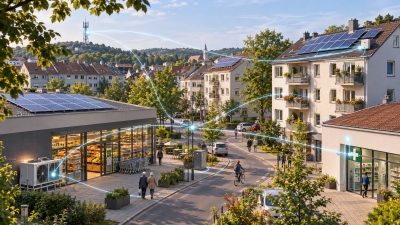
Digital dependence, local disruption and community resilience
Modern communities depend on far more digital infrastructure than most residents ever see. Refrigeration controllers, photovoltaic inverters, heating systems, logistics platforms and remotely managed industrial equipment increasingly connect ordinary physical services to software, communications networks and external providers. Most of the time, this connectivity remains almost invisible; its importance becomes clearer when something stops working.
For EUNWA, the relevance lies not in the technical management of cyber risk, but in understanding how disruption to digitally dependent services can affect the communities that Neighbourhood Watch organisations serve. The cases considered here are illustrative rather than directly comparable: they differ in sector, scale, cause and severity, and they do not establish a common frequency or a single underlying threat. What they do show is that disruption to connected systems can produce physical consequences well beyond the computer network itself.
When a technical vulnerability becomes a local disruption
Since 11 October 2026, commercial refrigeration systems and similar devices in several EU Member States have been affected by cybersecurity incidents. Following a further wave on 1–2 November, ENISA, the European Commission, Europol’s European Cybercrime Centre, the EU CSIRTs Network and EU-CyCLONe issued a joint statement calling for rapid information-sharing and coordinated mitigation. The incidents affected internet-connected refrigeration and temperature-control equipment rather than food distribution systems as a whole. [1]
For supermarkets, however, the consequences were physical and commercially significant. Retailers in several countries had to discard food, disconnect affected controllers from the internet and review or patch vulnerable systems after temperatures were manipulated remotely. These events should not be interpreted as evidence of a general food-supply crisis, but they demonstrate how a specialised technical weakness can cause immediate disruption in ordinary services used every day by local communities. [2]
When cyber disruption becomes physical disruption
The same family of incidents also affected cold-storage monitoring and control systems at three facilities belonging to France’s national blood service, Établissement français du sang. In that case, staff received alerts and transferred blood products to refrigeration units that were not connected to the compromised systems, preventing an impact on blood supplies. The technical compromise mattered, but so did monitoring, alternative capacity and established continuity procedures. [3]
A cyber incident therefore does not automatically become a community crisis. The outcome depends partly on how organisations detect failure, preserve essential functions and recover safely. This is an important distinction for community resilience: the presence of a digital vulnerability does not by itself tell us what the eventual social impact will be.
A larger-scale example from the energy sector
A more severe example can be found in Poland. On 29 December 2025, coordinated destructive cyberattacks targeted at least 30 wind and solar power installations, a manufacturing company and a large combined heat and power plant supplying heat to nearly half a million customers. The attacks disrupted communications with some renewable installations, but did not stop electricity generation, and the attempted disruption of heat supply at the large plant was unsuccessful. [4]
An August 2026 follow-up by CERT Polska revealed that the campaign was more extensive than initially reported. A second, smaller combined heat and power plant serving around 50,000 residents was also attacked; a steam turbine and water-treatment system were shut down, interrupting the cogeneration process. Prompt operator action limited the incident to a short outage and prevented disruption of heat supplies to consumers. The episode therefore illustrates both the potential for cyber activity to affect physical processes and the role of operational response in containing the consequences. [5]
Distributed systems, collective dependence
Digital dependence is not confined to large power stations, hospitals or other traditionally recognised critical infrastructure. In September 2026, the European Commission published recommendations assessing cybersecurity risks associated with internet-connected photovoltaic installations and their potential consequences for the resilience of the EU electricity system. The report examines threat scenarios across different categories of solar installations and evaluates their likelihood and potential impact. It is therefore a risk assessment, not evidence that widespread disruption through photovoltaic inverters has already occurred. [6]
The underlying issue is nevertheless important. A single photovoltaic inverter may have little significance for the wider electricity system, while thousands of similar connected devices can form part of a much larger technological ecosystem. Their collective importance may therefore be greater than that of any individual unit, especially where devices share common suppliers, software, remote-management arrangements or communications dependencies.
ENISA’s 2026 Threat Landscape places this problem in a broader context. It concludes that cyber dependencies expand the attack surface and that supply-chain and third-party attacks can result in large-scale or high-impact incidents. ENISA also notes that similar techniques and access mechanisms can recur across cybercrime, hacktivist and state-linked activity even when motivations differ. These findings do not make every connected device critical infrastructure, but they do show why dependency itself has become an important dimension of resilience. [7]
Regulation and operational resilience address different parts of the problem
The European regulatory framework is adapting to these risks at several levels. Since 11 September 2026, the Cyber Resilience Act has required manufacturers to report actively exploited vulnerabilities and severe incidents affecting the security of products with digital elements. Its main cybersecurity requirements, including secure-by-design obligations and lifecycle vulnerability management, will apply fully from 11 December 2027. [1, 8]
NIS2 addresses a different part of the picture by requiring covered essential and important entities to manage cybersecurity risks and report significant incidents. These are different and complementary parts of the regulatory framework: one focuses strongly on the security of digital products and the other on organisational risk management and incident handling in covered sectors. Neither distinction, however, removes the continuing need for redundancy, continuity planning, alternative procedures and the ability to maintain essential functions when normal systems fail.
The French blood-service incident illustrates why operational resilience matters alongside cybersecurity requirements. The key point was not simply that a connected system had been compromised, but that staff could detect the problem, move products and preserve the service. Resilience is therefore concerned not only with preventing intrusion, but also with limiting consequences.
Prepared households still depend on resilient systems
In November 2026, the European Commission issued new population-preparedness guidelines covering the first 72 hours of a crisis, preparedness education, inclusion and risk communication. The objective is to help people and communities protect themselves and cope during the initial phase of emergencies while public assistance is mobilised. [9]
Such preparedness matters. Households that know where to obtain reliable information, have appropriate basic supplies and understand how to respond to temporary disruption are better placed to cope. At the same time, household preparedness should complement, not substitute for, efforts to strengthen the resilience of the systems on which communities depend. Residents cannot independently restore an electricity distribution network, secure a commercial refrigeration supply chain or repair remotely managed industrial control equipment.
Community resilience therefore has at least two dimensions: people need reasonable capacity to cope with short-term disruption, while institutions, operators and manufacturers need robust systems, continuity arrangements and recovery capabilities. Treating these dimensions as complementary avoids placing unrealistic expectations on households or community organisations.
What this means for community networks
This does not create a new cybersecurity role for Neighbourhood Watch. Community volunteers should not inspect connected devices, search for technical vulnerabilities, monitor local digital infrastructure or attempt to assess cyber threats. Such activities require specialist expertise, appropriate authorisation and clear professional responsibility.
The possible relevance for community networks is narrower. During disruption, residents may need reliable information, clear routes to official guidance and an understanding of which services remain available. Some people may be disproportionately affected by a loss of heating, communications, transport or access to food and medicine. Where appropriate and agreed with competent authorities, existing community relationships may help verified information reach residents and make it easier for people to identify the professional services they need.
Any contribution should remain complementary to competent authorities and service providers, and it should not create informal registers of vulnerable residents or lead volunteers to collect sensitive personal information without a clear lawful purpose and appropriate safeguards. For EUNWA, the value of the topic lies in widening the discussion of community preparedness, not in extending Neighbourhood Watch into technical cybersecurity.
Resilience begins before something fails
The refrigeration incidents are striking because they expose infrastructure that normally attracts little public attention. A temperature controller in a supermarket or a photovoltaic inverter on a roof is not usually thought of as part of community resilience. Yet modern communities increasingly depend on large numbers of connected systems that sit somewhere between consumer technology, commercial infrastructure and essential service delivery.
This does not mean that every connected device should be labelled critical infrastructure, or that every cyber incident represents a community-safety threat. The more useful conclusion is narrower: digitalisation is changing the architecture of dependence, and resilience increasingly depends on both secure technology and the capacity to continue essential functions when technology fails.
For EUNWA, the emerging question is therefore not how Neighbourhood Watch should respond technically to cyber threats, but how community resilience should be understood when so much of everyday life depends on digital systems that residents rarely see, do not control and may only notice when they fail. Household preparedness is important, but it cannot substitute for resilient infrastructure.
Sources and further reading
- ENISA / European Commission / Europol / EU CSIRTs Network / EU-CyCLONe, “Joint statement on cyber incidents in refrigeration systems across the EU”, 4 November 2026. Source
- Reuters, “European supermarkets rush to patch vulnerabilities after region-wide fridge hack”, 3 November 2026. Source
- Reuters, “French blood banks hit alongside cyberattack on European supermarkets”, 4 November 2026. Source
- CERT Polska, “Energy Sector Incident Report — 29 December 2025”, 30 January 2026. Source
- CERT Polska, “Follow-Up Report of the December 2025 Energy Sector Incident”, 8 August 2026. Source
- European Commission, Smart Energy Expert Group, “Recommendations to address cybersecurity risk in photovoltaic generation”, 28 September 2026. Source
- ENISA, “Threat Landscape 2026”, 22 September 2026. Source
- European Commission, “Cyber Resilience Act — Reporting obligations and implementation”. Source
- European Commission, “Commission takes new steps to prepare Europeans for growing crisis risks”, 3 November 2026. Source

How Urban Design is Failing Women’s Safety
We’ve all felt it. That momentary chill walking through a deserted public space at night, even when the lights are on. It’s that feeling of being "small and invisible", as urban planner Nourhan Bassam aptly describes it in a recent article for Dutch newspaper Nrc. It perfectly captures a paradox at the heart of community safety.
In the wake of tragedies, like the murder of 17-year-old Lisa in Amsterdam on a cycle path women had already flagged as unsafe, the typical response is a call for "formal security measures". This usually means more CCTV or a greater police presence.
But as the report highlights, these measures don't always make women feel safer. Why? Because CCTV only helps after the fact. At the moment of the crime, it’s useless.
The real issue, experts argue, is that our cities have been historically designed by and for their "original planner: the man". This has created environments that fail to account for the lived experience and safety perceptions of women.
The Failure of Design: Formal vs. Social Safety
The core problem is a simple lack of 'eyes on the street' — a term famously coined by the visionary writer and activist Jane Jacobs in the 1960s. It refers to the natural, social surveillance from surrounding buildings and passers-by that makes a public space feel alive and safe.
The article identifies several common design failures that breed insecurity:
- Hostile Architecture: Anonymous office buildings, locked doorways, and few ground-floor windows create dead zones where no one is looking out.
- Poor Sightlines: Bus stops with advertising panels that block the view, or high fences around parks, make it impossible to see who is nearby.
- Bad Lighting: This isn't just about too little light; lighting that is too intense can be just as bad, creating deep, dark shadows where someone could hide.
- Obscured Areas: Overgrown bushes or tunnels without emergency exits create points of high anxiety.
- Single-Use Spaces: A renovated square in Utrecht, fitted with a skate park and CrossFit equipment, was cited as a prime example. As the urbanist notes, "it really seems as if half the population is simply forgotten".
- (Anachronistic or) Outdated Materials: Stone and cobblestone pavements, while aesthetically pleasing, create accessibility issues for women in heeled shoes. The irregular surface forces the heel to wedge between gaps, risking twisted ankles or broken heels. Unlike smooth surfaces, stone floors require constant attention while walking, making the experience tiring and uncomfortable. This architectural choice, though traditional, inadvertently excludes those who wear formal footwear, particularly women in professional or elegant settings.
How to Design for "Eyes on the Street"
Frustratingly, this knowledge isn't new. As one academic notes, urban planners were "having the same conversations forty years ago". It begs the question: why has so little changed?
The solutions proposed are not complex or expensive. They are simply centred on encouraging human presence:
- Placing more bars or kiosks that stay open late.
- Encouraging shops with windows that remain lit in the evening.
- Positioning tram stops near busy cafes, with open-plan shelters that don't block the view.
- Designing parks with well-lit paths and placing benches or sports facilities in raised, visible positions rather than hidden corners
- Choose smooth, even surfaces that accommodate all footwear types and mobility needs.
- Select vegetation that maintains clear sightlines: tall trees with high canopies, hedges kept below waist height, and open lawn areas that eliminate hiding spots while preserving green space.
Lessons from Europe
Whilst the Netherlands has been slow to act, other European cities are already showing how it's done.
- Vienna has had an office for gender-inclusive urban planning for 25 years.
- In Barcelona, women can request extra bus stops along the route after 10 PM to be dropped off closer to their homes.
- In Karlskoga, Sweden, authorities prioritise clearing snow from pavements (used more by women) before clearing roads.
These examples prove that a safer city for women is simply a safer city for everyone.
Experts insist this approach must become "a stable and mandatory part" of all urban development. It should be, they argue, "an essential requirement in tenders for newly built neighbourhoods".
This isn't just about changing infrastructure; it's about changing a mindset. We must move beyond reactive security and finally start designing public spaces that feel safe, by ensuring there are always eyes on the street.
Valeria Lorenzelli

Source: The analysis and expert opinions in this article are drawn from Steden zijn gebouwd door de ‘oorspronkelijke planner: de man’. Dat moet anders. (Cities were built by the 'original planner: the man'. That has to change.) by Julia Vié, originally published in Nrc (Netherlands), 10th October 2025.

A Growing Threat to Community Safety
A new position paper from Europol, the European Union Agency for Law Enforcement Cooperation, has highlighted the severe and growing threat of caller ID spoofing, calling it a primary driver of financial fraud and social engineering scams across Europe.
The report warns that this technique, which involves manipulating caller information to appear trustworthy, accounts for approximately 64% of reported fraud cases and results in an estimated annual global loss of €850 million.
For community safety advocates and neighbourhood watch groups, this report serves as a critical alert on a crime that directly targets citizens in their homes.
What is Caller ID Spoofing?
Caller ID spoofing is a technique where criminals deliberately manipulate the information displayed on a recipient's phone. By using Voice over Internet Protocol (VoIP) services or specialised apps, they can make a call or text appear to come from a trusted source, such as a bank, a government agency (like the tax office or police), a utility company, or even a family member.
The goal is to exploit trust. Criminals use this guise to:
- Trick recipients into revealing sensitive personal information.
- Persuade victims to make fraudulent payments or initiate money transfers.
- Conduct tech support scams, convincing victims of non-existent computer problems to gain remote access or demand payment.
- Execute dangerous harassment tactics like "swatting," where they falsely report a major emergency at a victim's address.
A Cross-Border Challenge
According to Europol, the current situation is "untenable". The technology makes spoofing easy and cheap to perpetrate, but exceptionally difficult for Law Enforcement Agencies (LEAs) to investigate.
Organised criminal networks intentionally operate from different countries to launch their attacks, creating "safe havens" that hinder investigations. These groups have even industrialised their methods, offering "spoofing-as-a-service" platforms that lower the barrier for other criminals to commit these crimes.
A Europol survey across 23 countries revealed significant challenges, including a lack of suitable regulatory frameworks and insufficient collaboration between LEAs and telecommunication operators.
Europol's Call to Action
To combat this, Europol is urging a unified, multi-faceted approach to make spoofing more complex and costly for criminals. The agency’s strategic objectives include:
- Harmonisation of Technical Standards: Creating unified EU-wide technical standards to trace fraudulent calls (traceback) and better distinguish legitimate international calls from spoofed ones.
- Enhanced Cross-Border Collaboration: Fostering a coordinated ecosystem between LEAs, industry, and regulators to enable rapid information sharing and enforcement.
- Regulatory Convergence: Aligning national laws to provide regulatory clarity and mandate service providers to implement robust validation mechanisms to block illegitimate traffic.
What This Means for Community Safety
Whilst high-level policy and technical standards are essential, public awareness remains the first and most powerful line of defence.
As criminals increasingly use technology to bypass traditional security, an informed and vigilant community is vital. The core mission of neighbourhood watch schemes—fostering social cohesion and promoting proactive crime prevention—is central to mitigating these modern threats.
Citizens must be educated to adopt a "zero-trust" approach to unsolicited calls, regardless of who the caller ID claims to be. The key advice remains:
- Be sceptical: If a call from a "trusted" source asks for sensitive information or money, hang up.
- Verify independently: Call the organisation back using a phone number you have sourced yourself from their official website or your own documents.
- Report: Report suspicious calls to the police and your telecommunications provider to help authorities and operators identify fraudulent patterns.
Europol's report is a clear signal that modern crime prevention must combinate high-tech solutions with foundational community awareness.

The Gallup "Global Safety Report 2025" reveals a striking paradox: in an era experiencing more armed conflicts than at any time since the Second World War, the global population's personal perception of safety has never been higher.
This report measures public confidence using the benchmark question for the UN's Sustainable Development Goal 16: "Do you feel safe walking alone at night in the city or area where you live?". The findings offer a complex and nuanced picture, especially for Europe.
A world that feels safer
Globally, 2024 marked a historic milestone. 73 per cent of adults worldwide said they feel safe walking alone at night. This is the highest figure recorded since Gallup began tracking the metric in 2006.
This positive trend is visible across several regions. The Asia-Pacific (79 per cent) and Western Europe (77 per cent) lead the rankings for perceived safety. Even Latin America and the Caribbean, while remaining among the least safe regions, reached the 50 per cent threshold for the first time.
At a national level, Singapore leads the world, with 98 per cent of residents feeling safe. At the other end of the spectrum is South Africa, where just 33 per cent of adults feel safe.
However, the report shows a clear fracture in this perception: the gender gap. Globally, there is an 11-percentage-point gap between men who feel safe (78 per cent) and women (67 per cent). This disparity, the report demonstrates, is particularly stark in the world's wealthiest regions.
Focus on Europe – a dark mirror for women's safety
Western Europe shines in the general rankings. With a 77 per cent regional score for perceived safety, it has matched or set new records. Countries like Norway (91 per cent), Denmark (89 per cent), Finland (88 per cent), and Switzerland (88 per cent) are among the safest in the world.
And yet, the Gallup report provides a critical insight: Europe has a systemic problem with women's perceived safety.
The report highlights that the largest gender gaps are found almost exclusively in "high-income economies". It explicitly states that the European Union is "overrepresented" in the list of the 10 countries with the largest gaps.
Five of the ten countries with the widest gender gap globally are EU members:
- Italy: Presents a 32-point gap. While 76 per cent of men feel safe, only 44 per cent of women do.
- Malta: A 29-point gap (85 per cent of men vs 56 per cent of women).
- Greece: A 26-point gap (77 per cent of men vs 51 per cent of women).
- Cyprus: A 26-point gap (85 per cent of men vs 59 per cent of women).
- The Netherlands: A 26-point gap (95 per cent of men vs 69 per cent of women).
The case of Italy is particularly striking. The 44 per cent of women who feel safe is not only the lowest figure in the European Union, but it is also the lowest figure for Italian women in more than a decade.
To put this figure into perspective, the Gallup report makes a stark comparison: the level of safety perceived by women in Italy (44 per cent) is on par with that of women in Uganda (44 per cent). In the same country, the safety perception of Italian men (76 per cent) is similar to that of men in Germany (78 per cent).
The 2025 Gallup report, while celebrating global progress, serves as a strong warning for Europe. It demonstrates that economic progress and strong institutions, by themselves, do not "eliminate inequality in how safe people—particularly women—feel in their daily lives". In a continent that perceives itself as a beacon of safety, the data shows this safety remains a profoundly unequal experience—a privilege not yet extended to all its citizens.

The pandemic and the Covid emergency have changed the evaluation criteria for the Economist's Safe Cities Index 2021. The requirements to enter the list have been rewritten. This report, drawn up by the English magazine that ranks every two years the safest cities in the world, in the 2021 edition has rewarded above all the cities that guarantee health security.
